How to Build an Evergreen Lead Nurture Sequence
How to Build an Evergreen Lead Nurture Sequence
Someone downloads your guide to choosing a winter sun destination. They are interested, but they have not decided where to go, when to travel or whether to ask an independent travel agent for help. You send the guide, perhaps a welcome email, and then the conversation goes quiet.
That is the gap an evergreen travel email nurture sequence is designed to close. Rather than sending the same holiday offer to everybody, you prepare a small series of helpful emails that reaches each suitable subscriber at the right stage of their journey. It keeps your expertise visible without demanding an immediate booking.
For someone building a travel homeworking business, this can make a real difference to consistency. You can be researching a family holiday, completing training or looking after an existing client while your planned content helps an earlier prospect move towards a useful conversation. Here is how to build a sequence that sounds like you, respects UK marketing rules and is practical enough to maintain.
What Makes a Lead Nurture Sequence Evergreen?
Evergreen content remains useful whenever somebody receives it. An email explaining how to choose between self-catering, half board and all inclusive can work in February or September. A message advertising a particular hotel at a fixed price next Friday cannot.
A nurture sequence is not the same as an acknowledgement, a live quotation follow-up or a newsletter. An acknowledgement confirms you have received a request; a quotation follow-up relates to an active conversation and real availability; a newsletter is usually sent to many people on a calendar date. Evergreen nurture sits between those activities. It helps someone who has shown interest but is not yet ready to begin a personal booking enquiry.
If your immediate problem is what to say after a new enquiry, read our guide to building an email welcome series for travel clients. This article tackles the longer-term system that follows, rather than repeating that initial welcome advice.
Start with One Traveller and One Useful Promise
It is tempting to design an elaborate automation with different messages for every destination. Start much smaller. Choose one type of prospect whose questions you understand and decide what your emails will help them achieve.
For example, a consultant hoping to attract first-time cruise clients could offer a short guide to choosing a first cruise. The follow-up would explain itinerary pace, the difference between sea days and port-intensive sailings, cabin considerations and what to ask before committing. That is more relevant than immediately broadcasting whichever cruise promotion arrived from a supplier this morning.
A family travel specialist could focus on parents who are comparing beach holidays. These readers may appreciate guidance on family room layouts, transfer times, meal costs and flight timings. They are not necessarily looking for the cheapest headline price. They are looking for a holiday that works for the people travelling.
Your initial resource can be a checklist, article, short guide or genuinely useful downloadable planner. Our example of creating a winter sun travel lead magnet shows how to choose a topic that attracts the right kind of interest. Importantly, receiving a requested resource does not itself grant permission to add someone to a separate marketing sequence.
Plan the Sequence Around Real Questions, Not Sales Messages
A good starting point is five useful messages spread over a few weeks, followed by an optional, less frequent stream for people who have chosen to stay subscribed. These are suggested intervals, not fixed rules or a promise of results. The timing should match your audience and the expectation you set when they subscribed.
Email 1 - Deliver what you promised
When: Immediately after the person requests the resource. Subject idea: Your first-time cruise planning guide is here.
Thank the reader, supply the promised guide and introduce yourself in a sentence or two. Explain clearly if they have separately chosen to receive further useful emails. Avoid making a sales pitch the price of accessing something they requested.
Email 2 - Help them make one decision
When: Around three days later, where marketing permission allows. Subject idea: Port days or sea days - which would you enjoy?
Explain the practical difference between a port-intensive Mediterranean sailing and a slower itinerary with more time on board. A couple who enjoys exploring independently may welcome frequent stops, while a family hoping to enjoy the ship's facilities could prefer a less hectic pace. Finish with one natural question, such as what they imagine enjoying most about their holiday.
Email 3 - Show how you think as a consultant
When: Around one week after sign-up. Subject idea: A cabin choice worth thinking about before you book.
Offer a short explanation of something easily overlooked, such as cabin location, accessibility requirements, family occupancy or the differences between a guaranteed cabin and a selected cabin. Do not claim every ship or fare works alike. Your role is to help readers understand what to ask, not to give an answer that ignores their particular sailing.
Email 4 - Answer the question behind the hesitation
When: Around two weeks after sign-up. Subject idea: What does a travel consultant actually help with?
Explain how an independent travel consultant listens to the traveller's priorities, checks appropriate options and helps with the details and booking process. A genuine review or accurately described client example can illustrate your service, but only use material you have permission to share. Be accurate about financial protection: the arrangements, including ATOL where applicable, depend on the holiday and booking route.
Email 5 - Make a conversation easy
When: Around three weeks after sign-up. Subject idea: Would it help to talk through your cruise plans?
Invite a simple reply with an approximate travel month, preferred departure area and what matters most. Reassure the reader that they do not need a perfectly formed itinerary to ask a question. One clear invitation is better than several competing buttons, supplier promotions and links.
These five emails give the sequence a beginning, a useful middle and a respectful invitation. They are illustrative editorial examples, not ready-made messages that should be sent without adapting them to your business, permissions and approved marketing arrangements.
Keep the Longer-Term Follow-Up Helpful
Some people plan a major holiday a year or more ahead. Others will download a guide and decide that travelling is not a priority after all. For subscribers who have chosen ongoing contact, you might follow the introductory sequence with one helpful email every four to six weeks. Monitor what people actually want instead of automatically keeping a monthly series running forever.
Evergreen ideas include questions you are asked repeatedly: whether all inclusive represents good value, what makes a family room suitable, how to compare cruise itineraries, and why transfer time matters as much as flight duration for some travellers. Avoid permanent automated content containing old package prices, supplier deals, changing visa rules or claims about seasonal weather that need checking.
When a new email idea comes from a real client question, capture it in your content plan. You can turn one well-researched answer into a blog post, a social media explanation and an evergreen email without repeating the same advert across every channel.
Use Simple Segments So the Emails Feel Personal
One generic sequence cannot speak equally well to someone researching a honeymoon, a multi-generational family holiday and an expedition cruise. At first, even two or three sensible groups may be enough: new subscribers interested in family travel, people considering cruises, and prospects exploring winter sun.
Record only information you legitimately need, such as the guide requested, a voluntarily selected travel interest or a stated travel timeframe. Someone clicking an article about Japan is not automatically asking to receive a year of Japan promotions, and a family's past booking does not mean their circumstances never change. For more on organising a small list, see segmenting your travel email list for better results.
Small touches are more convincing than elaborate personalisation. Mention the topic the person actually signed up for and let them reply directly. Never pretend an automated email is a personal response to an enquiry you have not reviewed.
Build Clear Triggers, Pauses and Stop Conditions
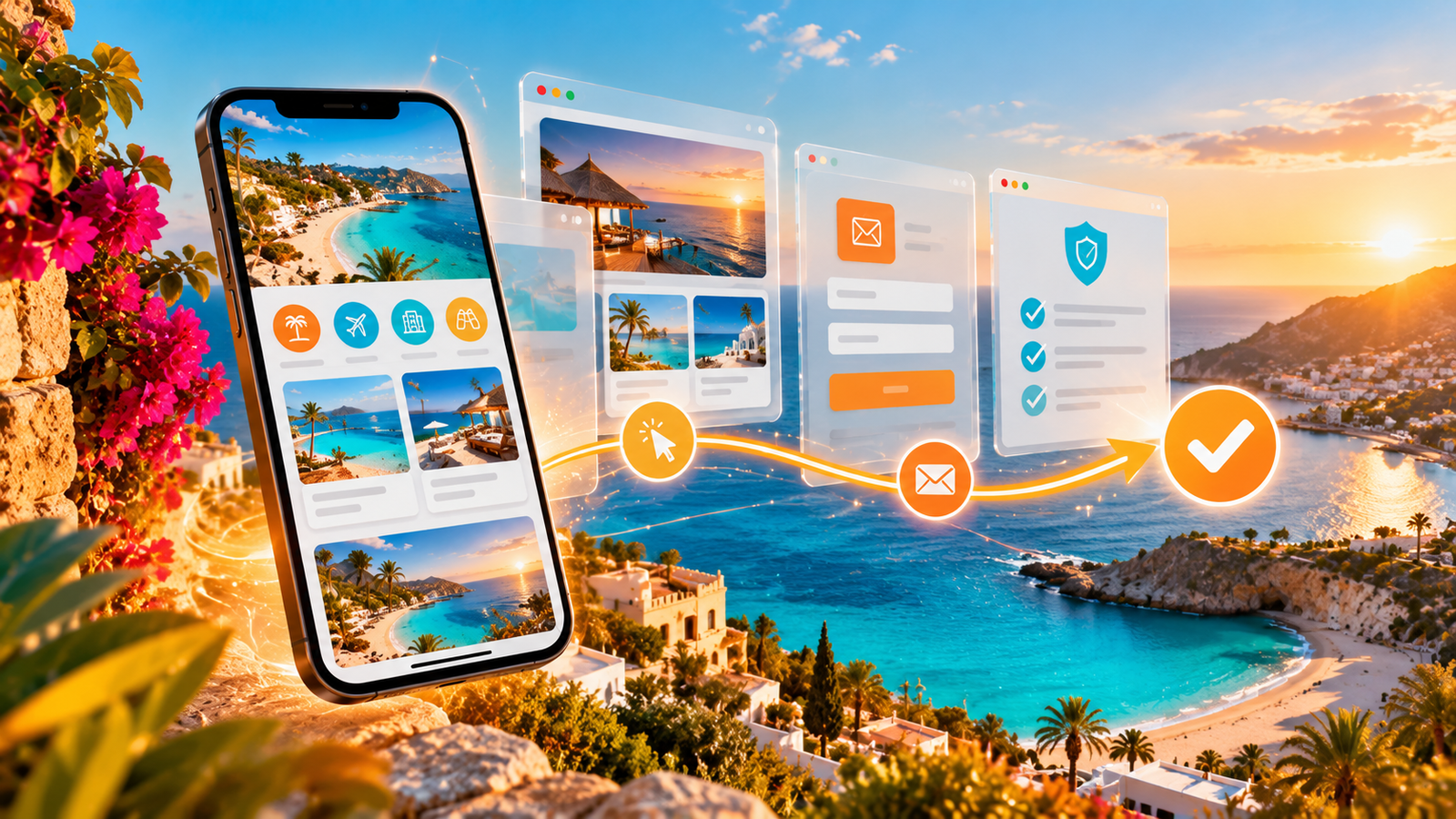
A sensible automation starts when a person has taken a defined action and you have a valid basis to send that particular message. Record the source, relevant interest, date and marketing preference in your approved systems. Then decide which events should stop or interrupt the sequence.
- When somebody replies or requests a quote: pause the general nurture messages and handle their actual enquiry personally.
- When they book: exit the prospect sequence. Booking confirmation, ATOL documentation where relevant, payments and other booking communications must follow the proper process, not a marketing automation.
- When they unsubscribe: suppress future marketing messages immediately while keeping an appropriate record of the opt-out.
- When a trip date or product detail becomes time-sensitive: move to a personalised, checked conversation rather than relying on evergreen promises.
- When a subscriber becomes inactive: review whether the content remains wanted and whether continued marketing is appropriate. More messages are not necessarily the answer.
This distinction matters especially for a travel homeworker. A booking or complex question needs your professional attention; an automated email can help someone reach that point but should not replace your judgement. Our article about following up travel enquiries between enquiry and booking explores the personal side of that process.
Get the UK Email Marketing Permissions Right
Do not treat a downloaded guide, a business card, a Facebook conversation or an ordinary holiday enquiry as blanket permission to send marketing emails. UK marketing emails to individuals are governed by the Privacy and Electronic Communications Regulations (PECR), alongside relevant data protection requirements. In general, you need valid consent unless you can satisfy a specific exception, such as the limited existing-customer soft opt-in with all its conditions met. A new prospect is not automatically covered by that exception.
Explain clearly what someone is signing up for, avoid pre-ticked marketing boxes, maintain permission and suppression records, identify who is sending the emails and provide a straightforward unsubscribe method in every marketing email. Keep the requested resource delivery and optional ongoing marketing choices distinct. Follow the procedures agreed with your agency and check the Information Commissioner's Office guidance if you are unsure.
Never copy email addresses from past enquiries into a new campaign simply because they appear in your contacts. Consent and preferences must carry through any marketing system you use. This is an area where doing less, but doing it properly, protects both the traveller and your professional reputation.
Choose Technology You Can Actually Maintain
You do not need an elaborate marketing platform on day one. Look for clear sign-up records, simple sequences, interest tags, an unsubscribe facility, suppression controls, a way to stop messages when somebody becomes an active enquiry and reporting that helps you understand replies.
Write your messages first, then choose the software that can send them in an appropriate and approved way. Test the complete journey with a permitted test address. Check that the download arrives, the timings make sense, the unsubscribe works and the sequence stops when it should. If your preferred system cannot reliably identify that somebody has booked, do not leave it running unattended.
Our broader guide to using email automation in travel marketing covers other appropriate uses for the technology. An evergreen nurture sequence is just one part of a properly organised communication process.
Measure Conversations, Not Just Opens
Open rates can be affected by privacy features and do not tell you whether a holiday business is growing. A useful starting scorecard records how many people gave valid permission, how many received the sequence, replies, genuine enquiries, suitable discovery conversations and, eventually, attributable bookings. Track unsubscribe and complaint signals too.
Imagine 40 suitable people join a cruise guide list in a month. Six reply to a planning question, three become qualified enquiries and one later books. That is an illustrative scenario, not a performance benchmark, but it gives you more to learn from than celebrating a high open rate. Was the content relevant? Did the invitation match the client's stage? Did the consultant respond personally when someone raised their hand?
If your website is attracting readers but very few are joining the conversation, review the route from content to enquiry as well as the emails themselves. Our guide to turning website visitors into genuine travel enquiries can help you spot problems earlier in the journey.
Jamie Says:
"I would much rather see a consultant send five thoughtful emails to people who want to hear from them than fifty offers to people who do not. The best follow-up reminds a traveller that you listen, understand the details and can help when the time is right. Automation should make it easier to build that relationship, not make the relationship feel automated."
How This Fits a Travel Homeworking Business
When you become a self-employed independent travel consultant, you are responsible for developing your own client base and looking after the relationships you create. A simple nurture sequence can support that work, but it will not supply guaranteed enquiries, take over personal service or replace the need to learn professional booking procedures.
At The Independent Travel Consultants, our role is to support consultants with structured learning, approved booking processes, supplier access and ongoing guidance through Jamie Wake Travel. The Academy and staged training help new consultants build the foundations before accessing the relevant products and booking activities. You can explore our training and support for independent travel consultants to understand that approach. Any individual marketing systems or campaigns still need to follow the business's requirements.
Start with one audience, one useful resource and a handful of clear emails. When that sequence earns genuine conversations, you can improve it and consider a second audience. There is little value in automating ten different journeys before the first one works.
A Note for Members of the Public
This article is primarily for people interested in becoming travel homeworkers or developing a business with The Independent Travel Consultants. If you are reading because you want somebody knowledgeable to help plan a holiday, you are very welcome here too. Our public directory lets you find an independent travel agent and connect with a consultant whose experience suits your plans. You do not need to join an email sequence to ask for help.
Frequently Asked Questions
How many emails should a travel email nurture sequence include?
Five is a manageable starting point, not a magic number. Use enough messages to deliver useful advice, build trust and offer a conversation. The right length depends on your audience, permissions and what people expected when they subscribed.
How often should I send evergreen nurture emails?
You might use several emails over the first three weeks, then send less frequently to those who want ongoing advice. Test your timings, monitor unsubscribes and avoid overlapping campaigns. Some travel decisions take months; frequency should reflect the relationship, not a software default.
Can I add someone who asked me for a quotation?
Not automatically. Responding to their specific enquiry is different from enrolling them in wider marketing. Check that you have the appropriate basis for each communication under UK rules and the marketing procedures you work within.
Should the automation continue once a client has booked?
No, the prospect nurture sequence should stop. The client now needs tailored booking communications and care appropriate to their holiday. Any separate future marketing must respect their recorded preferences and the relevant rules.
Do I need travel industry experience or expensive software to start?
You can learn the principle without paying for sophisticated software, and newcomers can develop marketing skills during training. You must still work within your agency's approved systems, permissions and marketing standards. Good client listening and accurate travel knowledge matter more than automation complexity.
Build a Travel Business That People Want to Hear From
The aim of an evergreen travel email nurture sequence is not to chase people until they book. It is to become the helpful, credible travel professional they remember when they are ready to discuss their plans. A clear audience, relevant emails, appropriate permission and timely personal follow-up will take you further than a complicated campaign nobody can maintain.
If you are considering travel homeworking, explore what joining The Independent Travel Consultants involves, including the reality of building your own self-employed business with training and support behind you. When you are ready to talk through your plans, get in touch to arrange a discovery call. We would be pleased to explain the opportunity and help you decide whether it suits you.
About Jamie Wake
Jamie Wake is the founder of The Independent Travel Consultants and Jamie Wake Travel, helping people build sustainable travel businesses with practical training, supportive systems and genuine guidance behind them.
Having built his own travel business following redundancy, Jamie understands the uncertainty, determination and learning involved in starting something new. He combines hands-on experience of running a UK travel company with knowledge of travel sales, customer service, marketing, supplier relationships, compliance and day-to-day business operations.
Through The Independent Travel Consultants, Jamie shares practical, honest guidance about becoming a travel homeworker, attracting and supporting customers and building a business that feels personal, professional and sustainable—not simply chasing bookings at any cost.