
How to Prepare Your Website for the Booking Rush
How to Prepare Your Website for the Booking Rush
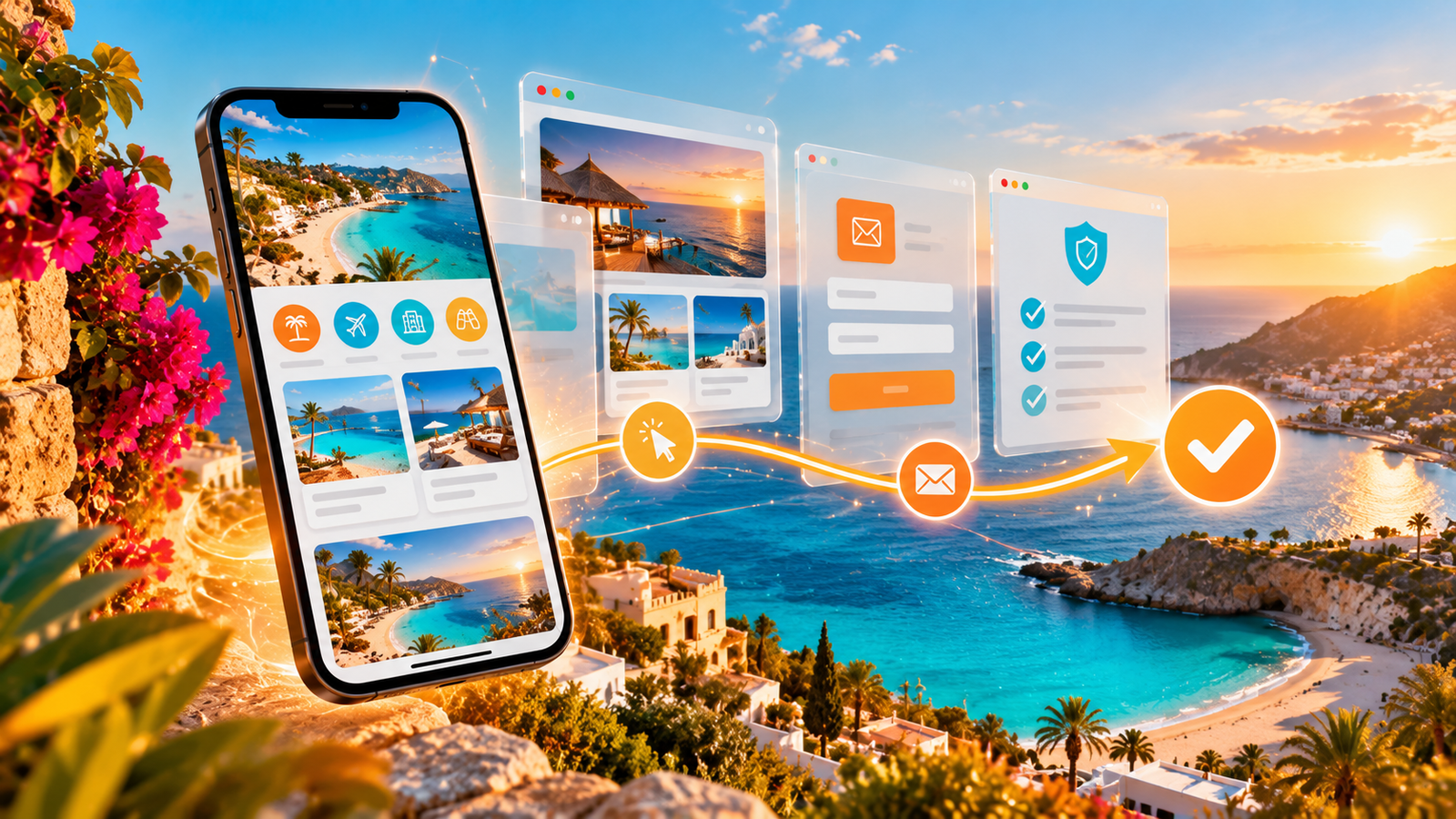
Picture the moment somebody decides to start planning their next holiday. They remember a helpful post you shared, search for your name and land on your website. They like what they see, but the menu is awkward on their phone. They find a promising page, yet the enquiry form fails without explaining why. By the time they give up, you may never know that a potential client was there at all.
January is traditionally an important booking period for UK travel businesses, but the work that makes a website useful should happen before the rush. And making a travel website peak ready is not about adding a countdown clock or decorating every page with holiday offers. It means helping the right people understand your service, trust your business and contact you without unnecessary effort.
This guide is written primarily for aspiring and existing travel homeworkers. It is also relevant if you run your own independent travel agent website or maintain a consultant profile within an established host agency. We will look at the checks worth doing before January 2027, what to fix first and why a reliable enquiry journey is more valuable than a last-minute redesign.
Start with what a visitor is trying to do
Before looking at technical scores, ask a simpler question: what job should your website do? For most self-employed travel consultants, the immediate job is not to take a fully automated payment. It is to make a prospective client confident enough to request personalised advice, explain their holiday and begin a professional booking conversation.
A family exploring a summer holiday might want to know whether you handle complex room arrangements, what information you need and how to enquire. A couple planning a honeymoon may be looking for specialist knowledge and reassurance about support. Someone considering joining a homeworking network needs an entirely different journey, with honest information about training, costs and business responsibilities.
If a website serves both consumers and prospective consultants, these pathways should be clear rather than competing for the same button. The Independent Travel Consultants uses a dedicated recruitment route as well as a public consultant directory. Your own website or profile should likewise be unambiguous about whom it serves and what happens next.
For a broader audit of content and structure, read why autumn is a good time to audit your travel website. Here we concentrate on making the journey reliable and ready for a busier enquiry period.
1. Test the entire enquiry journey, not just the homepage
Open your site as though you have never seen it before. Do not start from your administration panel. Start with the page a real customer might find through Google, a Facebook post or a shared link. Can they tell within a few moments what type of holidays you help with and how to contact you?
Then complete the actual enquiry path. Use a realistic test enquiry with clearly fictional details rather than a real customer's sensitive information. Submit it through a mobile phone, follow the confirmation screen and verify that it reaches the intended approved inbox or CRM. If there is an automated acknowledgement, check its wording, sender details and links too.
A form that appears to submit is not necessarily working. It might record an entry but fail to alert the consultant, send it to an old address or leave the visitor staring at an empty page. The test must cover both sides: what the visitor sees and what your business receives.
Ask a trusted person to repeat the process without coaching them. Their hesitation may reveal something that you no longer notice because you know your own website too well. Our article on making your travel enquiry form work harder explores how to collect useful information without creating an intimidating questionnaire.
2. Make the experience genuinely usable on a phone
Many potential clients will explore holiday ideas on a phone while travelling home from work, sitting on the sofa or discussing plans with family. A layout that looks excellent on a wide desktop monitor can still feel cramped on a smaller screen. This is worth testing in real conditions rather than assuming a mobile preview tells the whole story.
Check that navigation opens comfortably, important buttons can be tapped without hitting neighbouring links, images do not obscure text and no page requires sideways scrolling. Zoom the text, increase your phone's display settings and try the website with the on-screen keyboard visible. If a form error occurs, does the message explain what needs correcting without erasing the other information?
There is a difference between having a mobile layout and having a usable mobile experience. A long page may be perfectly acceptable if headings are clear, the information is worthwhile and the enquiry route remains easy to find. Conversely, a short page can still fail if the contact button is hidden or the form is difficult to complete.
Accessibility is part of this work. Use meaningful link labels, sufficient contrast, clear form fields and useful alternative text for informative images. Videos should not rely exclusively on sound to explain the message, and unnecessary movement should not prevent someone reading comfortably.
3. Make it immediately clear who clients are dealing with
Travel customers may be considering spending thousands of pounds on a holiday, so a professional-looking website is not enough on its own. People want to know who will advise them, which business handles their booking and how they can obtain assistance. A useful introduction should answer those questions without making the reader dig through small print.
Explain your role accurately. If you are a self-employed consultant trading within an established travel business, distinguish your personal brand from the host company. Include current contact information, the appropriate trading and booking arrangements, and truthful information about the experience or specialisms you can offer. A genuine photograph or brief personal introduction can be valuable, but there is no need for every page to repeat the same formal biography.
Financial protection claims need particular care. Do not place an ATOL logo on a page in a way that suggests every service you can arrange is automatically ATOL-protected. Protection depends on the actual booking and its organiser. Likewise, do not claim ABTA membership, a supplier relationship or a professional accreditation that does not apply. If your host business has approved wording or brand guidance, use it.
The same care applies to reviews. Publish genuine client experiences only with appropriate permission, avoid misleading impressions and make sure quoted feedback is accurately attributed or clearly anonymised. Trust is built through verifiable information and good service, not decorative badges.
4. Revisit your homepage before adding new pages
A homepage should help visitors make a decision about where to go next. It does not need to describe every destination you could possibly sell. Instead, use a clear opening message, explain the types of travel you can help with and offer a straightforward route to enquire or explore more.
For example, a consultant specialising in cruise holidays may benefit from saying they help clients compare cruise lines, cabins and itineraries rather than using a broad statement about making dreams come true. A consultant focusing on complex family holidays could mention room configurations, school-holiday travel and practical itinerary planning.
Make sure the promise you communicate can actually be delivered. If you are still in training, do not describe yourself as ready to accept bookings until you are authorised. If you work part-time, avoid promising immediate round-the-clock replies. Describe the service confidently while setting expectations you can meet.
Our guide to what to include on a travel website homepage can help you refine the first impression without attempting a complete rebrand.
5. Refresh the pages customers are already finding
It is tempting to publish a new destination article every few days in the hope of attracting more search traffic. Before doing that, identify which existing pages already receive relevant visitors. A useful guide that answers a genuine travel-planning question may deserve a better heading, fresher information or a clearer enquiry route more than the website needs another similar article.
Review your actual search and website data, where available, to identify useful pages, queries and changes over time. A page about winter sunshine could clarify which destinations offer mild weather and which are better suited to people who want hotter beach conditions. A cruise guide could help readers understand inclusions, cabin types or travel arrangements, then point them towards a relevant consultation.
Check outdated hotel descriptions, event dates, visa statements, outdated offers and broken references. Do not merely change the date on an old post to make it look newly researched. If you make a meaningful update, ensure the content genuinely reflects that work.
Use different articles for different questions. Several nearly identical pages targeting tiny keyword variations can make the site harder to navigate and can compete for the same readers. Our guide to creating a travel blog that attracts genuine clients offers a more sustainable approach than publishing content for its own sake.
6. Make internal links work like helpful signposts
A visitor reading a winter-sun article may need more information about all-inclusive arrangements, flight times or family-friendly resorts before deciding to enquire. Relevant internal links help them continue naturally. The point is not to place ten links in every paragraph but to provide a sensible route through related information.
Use descriptive wording that explains the destination. 'Compare our advice on choosing a winter-sun resort' is clearer than 'click here'. If the content is mainly for prospective travel homeworkers, link to the appropriate explanation of the homeworking opportunity rather than sending a prospective holiday customer into a recruitment process.
For a consultant with a small personal site, three strong pages connected well are more useful than thirty pages with no coherent journey. A clear service page, a helpful guide and a working enquiry form are a good foundation. If your host company provides a public directory profile rather than a separate site, concentrate on making that profile accurate and easy to use.
7. Check speed and images without destroying the design
Large, unoptimised images, unnecessary video backgrounds and layers of scripts can make pages slower, particularly on mobile connections. You do not need to abandon strong destination photography, but images should be properly sized and the layout should remain usable while content loads.
Review your key pages using a recognised performance tool and, just as importantly, your own phone on a normal connection. Watch for images jumping around as they appear, buttons that take a long time to respond and pages where the main information is hidden behind a large visual introduction. If you use a hosted site builder, you may not control every technical setting, so prioritise improvements you can actually make and ask the platform or developer about the rest.
SEO and performance tools can help identify a problem; their scores are not bookings and they do not guarantee higher Google rankings. If you only have a few relevant visitors, fixing an enquiry form that fails is likely to be more urgent than chasing a perfect speed score on a rarely visited page.
8. Protect enquiry data and check permissions
Travel enquiries may contain sensitive information about dates, family circumstances, accessibility requirements and contact details. Your website should request only the information needed at that stage, show an appropriate privacy notice and send submissions through approved secure processes. Do not invite people to send full passport details or payment card information through an ordinary public contact form.
Check who receives the enquiry, who can access it, how long it is retained and whether the website connects to any other system. Staff or consultant changes can leave old notification recipients in place. Make sure personal data is not being copied into marketing tools or ordinary analytics unnecessarily.
It is also important not to confuse an enquiry with marketing consent. Someone requesting a holiday quote has not automatically agreed to ongoing promotional messages. Review your cookie and marketing arrangements against the relevant UK rules, provide suitable notices and opt-out routes, and follow your host company's approved procedures.
9. Prepare the business for what happens after the form
A polished website can generate interest, but the client still needs someone to respond. Decide how you will handle an acknowledgement, a meaningful first reply, qualification questions, quotations and agreed follow-ups. If a prospect enquires on a Saturday evening, do not promise a complete personalised itinerary in minutes unless that is genuinely realistic.
At The Independent Travel Consultants, consultants operate within approved enquiry, booking and compliance processes. The website is an introduction to the service, not permission to bypass booking authorisation, approved payment arrangements, booking notifications or required protection documents. A simple, reliable handover from enquiry to CRM and then to the correct booking process is essential.
Test your response workflow using the same fictional enquiry you submitted earlier. Can you identify who owns it, where the client's original requirements are saved, whether there is an agreed next step and how the customer will hear from you? This is particularly important if enquiries arrive through several routes, such as your website, consultant directory, email and social media.
Our article on auditing travel systems from enquiry to booking explores the operational side, while following up travel enquiries thoughtfully looks at continuing a conversation once a quote has been sent.
10. Avoid a major redesign just before the busiest period
When a site needs improvement, the instinct can be to replace everything. That may be right for a long-term project, but a hurried rebuild shortly before January introduces risk. Links can break, enquiry forms can lose their connections and useful pages can disappear from navigation or search while changes settle.
Instead, make a short, prioritised list: first anything preventing a visitor contacting you, then incorrect trust or service information, then important mobile and speed problems, followed by improvements to content and presentation. Keep a record of what changed and test the customer journey again after every meaningful update.
For a small homeworking business, a dependable site that explains your service clearly is a more valuable pre-Peaks asset than a complex redesign that remains unfinished in January. You can plan larger structural work for a quieter period with enough time to test it properly.
A practical four-week website readiness plan
You do not have to complete every improvement in one weekend. If you are working around employment or family commitments, spread the work across four short sessions and deal with the most serious problems first.
- Week one - test the customer journey. Open the site on desktop and mobile, find the main service, submit a fictional test enquiry and confirm it arrives correctly. Fix failures before beginning cosmetic changes.
- Week two - check accuracy and trust. Review your contact details, consultant identity, booking explanation, financial-protection wording, FAQs, privacy information and any pages with outdated offers.
- Week three - improve useful pages. Refresh the pages already attracting relevant visitors, add descriptive internal links and make sure each has an appropriate next step. Check that important images are sized sensibly.
- Week four - retest and record. Repeat the enquiry journey, review any remaining mobile problems, check broken links and make a short note of what was fixed and what can safely wait until after Peaks.
If a consultant does not have a personal website, the same plan can be applied in smaller form to their approved public profile, social links and the route by which clients submit their enquiries. Do not spend money on a separate website simply because a checklist suggests you should have one. Use the tools that suit your business model and your stage of training.
How to tell if the changes made a difference
Website visits alone do not tell the whole story. A small number of suitable enquiries may be more valuable than a large amount of unrelated traffic. Review which pages people reached, where enquiries originated, whether forms worked reliably and what types of questions visitors actually asked.
If you use search reporting or analytics, keep the comparison fair. A seasonal page may fluctuate simply because demand changes around Christmas or the school holidays. Do not attribute every January booking to a heading you edited in November. Look for a sensible combination of evidence: fewer broken submissions, clearer enquiries, fewer repeated questions and better continuity between the website and your client records.
Where traffic is low, informal usability testing and feedback from real conversations may tell you more than a formal split test. Keep your measurement proportionate to the size and resources of your business.
Jamie Says
Jamie Says:
"I would rather see a consultant with a simple website or profile that explains what they do and sends every enquiry to the right place than an impressive site that looks beautiful but does not work properly. We put a lot of effort into getting people interested in travel. The last thing we want is to lose them because a button has stopped working or nobody knows an enquiry has arrived. Test the basics, be clear about your service and make it easy for clients to talk to you."
What this means for somebody considering travel homeworking
One of the attractions of becoming a travel homeworker is being able to develop your own client relationships and, where permitted, your own brand. But building an independent travel business also means learning how enquiries, booking systems, payments, financial protection and aftercare fit together. A personal website is only one possible part of that journey.
The Independent Travel Consultants is the homeworking division of Jamie Wake Travel. Its consultants are self-employed and can build their own client base with online training, approved suppliers, systems and ongoing support. There is no joining fee and the standard monthly service fee is £50. The standard consultant share starts at 80% of commission or booking profit after applicable costs. Income is not guaranteed, and consultants must complete the required training and follow approved processes before taking bookings.
If you are comparing opportunities, you can read about joining The Independent Travel Consultants and how the business, training and support work. You do not need to become a web designer to run a good travel homeworking business. You do need to understand how customers reach you and how you look after them once they do.
A note for members of the public
This article is primarily written for people considering becoming travel homeworkers or improving their business with The Independent Travel Consultants. Members of the public are very welcome to use our site when planning a holiday too. You can find a travel consultant in the UK through our public directory and choose a specialist whose knowledge matches the trip you have in mind.
Frequently asked questions about making a travel website peak ready
What should a travel agent check first before January Peaks?
Check whether the website clearly explains the service and whether an enquiry can actually be submitted and received. A working mobile form and a reliable response route are more urgent than new graphics or another blog post.
Does every travel homeworker need a personal website?
No. Some consultants use an approved host-company profile or public directory listing alongside social media and referrals. The important thing is having an accurate, professional and compliant way for potential clients to learn about the service and get in touch.
How can I check if my travel enquiry form works?
Submit a fictional test from a phone and another device, check the confirmation message, and verify that the submission reaches the correct approved CRM or inbox. Test required fields and error messages, then repeat after making changes to the site.
Will improving website speed guarantee more holiday bookings?
No. Speed and usability can remove obstacles, but bookings also depend on the visitor's needs, the quality of your advice, availability, pricing and service. Use performance tools to identify real issues rather than expecting a score to guarantee sales.
Should I redesign my travel website before peak season?
Only if there is a clear need and enough time to build and test safely. Close to January, targeted fixes to forms, mobile navigation, inaccurate content and broken links are often a more manageable choice than replacing the entire site.
What should my website say about ATOL and financial protection?
Explain the travel business and booking arrangements accurately, using approved wording and any logos you are entitled to display. Do not imply that every product is ATOL-protected. The correct protection and paperwork depend on the actual booking type and organiser.
Make it easier for the right people to find and trust you
A website does not need to be complicated to play an important role in a travel business. It needs to answer real questions, work reliably and connect a potential customer to somebody who can help. A few thoughtful improvements now can leave you better prepared for January without taking your attention away from existing clients.
If you are thinking about developing your own travel business and want to understand the training, support and practical responsibilities involved, get in touch to arrange a friendly discovery call. We can talk through how The Independent Travel Consultants works and whether travel homeworking might suit the business you want to build.
About Jamie Wake
Jamie Wake is the founder of The Independent Travel Consultants and Jamie Wake Travel, helping people build sustainable travel businesses with practical training, supportive systems and genuine guidance behind them.
Having built his own travel business following redundancy, Jamie understands the uncertainty, determination and learning involved in starting something new. He combines hands-on experience of running a UK travel company with knowledge of travel sales, customer service, marketing, supplier relationships, compliance and day-to-day business operations.
Through The Independent Travel Consultants, Jamie shares practical, honest guidance about becoming a travel homeworker, attracting and supporting customers and building a business that feels personal, professional and sustainable—not simply chasing bookings at any cost.