Creating a Lead Magnet for Winter Sun Holidays
Creating a Lead Magnet for Winter Sun Holidays

A good winter sun campaign should do more than fill your social feed with palm trees and hotel offers. It should give the right person a reason to stop, recognise that you understand what they are looking for and begin a conversation with you.
That is where a winter sun travel lead magnet can work particularly well. Instead of asking somebody to enquire before they are ready, you offer a useful resource that helps them make an early holiday decision - then give them a natural route to ask for personal help when they want it.
For a travel homeworker, this can be especially valuable because building your own client base is part of building a sustainable travel business. The Independent Travel Consultants provides training, systems and support, but consultants still need to develop visibility, relationships and marketing that attracts the people they actually want to work with.
If you are new to the idea, our wider guide to creating a seasonal travel lead magnet explains the general principles. This article takes one seasonal opportunity - winter sun - and turns it into a practical campaign you could actually build.
Why Winter Sun Is a Strong Lead Magnet Topic
Winter sun is a useful marketing theme because the client often begins with a feeling rather than a destination. They may know they want warmth in November, January or February, but they have not yet decided whether that means the Canary Islands, Cape Verde, Egypt, Dubai, the Caribbean or somewhere farther afield.
That uncertainty creates a useful gap for an independent travel consultant. A supplier advert usually promotes one hotel or one destination. A well-designed lead magnet can help the client compare the decisions behind the holiday - flying time, likely weather, atmosphere, board basis, budget, resort style and how much travelling they want to do.
The goal is not to give them a giant directory of sunny places. It is to help them narrow the choice while demonstrating the kind of judgement you bring as a travel consultant.
That is also why winter sun works better as a focused campaign than a generic travel inspiration download. Someone requesting a guide about winter warmth is revealing a real area of interest. They may not be ready to book today, but they have given you a far clearer signal than somebody who simply liked a beach photograph.
Start With the Winter Sun Client You Want to Attract
Before opening Canva or choosing destination photographs, decide who the resource is actually for. The strongest lead magnets feel as if they were made for one recognisable type of traveller.
If you are not yet clear about your audience, our guide to identifying your ideal client as a travel homeworker is a useful starting point.
Couples who want warmth without a complicated trip
This audience may value direct flights, a manageable journey, good hotels, a relaxed atmosphere and the ability to escape the UK winter for a week. Your guide could compare shorter and medium-haul choices and explain the compromises between flying time, temperature expectations and holiday style.
Families travelling during school holidays
Families may care more about suitable room arrangements, all-inclusive options, children's facilities, transfer times, pools, usable beaches and whether the overall journey feels realistic with younger travellers. A useful lead magnet can help them think beyond the headline price and choose the type of winter sun holiday that will actually work for the family.
Clients looking for a bigger long-haul escape
For clients considering the Caribbean, Indian Ocean, Asia or another long-haul option, the planning questions change again. They may be comparing flight time, weather patterns, resort style, touring possibilities, special occasions and whether a longer trip justifies travelling farther.
You do not need to create three different resources immediately. Pick the audience that best matches the business you want to build. A specific guide for the right people is more valuable than a broad download that attracts everybody and qualifies nobody.
Choose a Lead Magnet That Helps Someone Decide
The most useful winter sun lead magnet is not necessarily “Top 10 Winter Sun Destinations”. That can become another article people skim and forget.
Instead, build the resource around a decision the potential client is already trying to make. Good options include:
- Which Winter Sun Destination Suits You? - a short chooser comparing journey length, holiday style and broad destination characteristics.
- Short-Haul or Long-Haul Winter Sun? - a decision guide for clients weighing convenience against a more far-flung escape.
- Your Winter Sun Holiday Planner - a worksheet covering dates, departure airport, budget, board basis, priorities and must-haves.
- Winter Sun for Families - a practical checklist focused on room arrangements, pools, transfers, children's facilities and meal plans.
- Winter Sun Without the Guesswork - a comparison guide designed for people who know they want warmth but have no idea where to begin.
The principle is simple: the title should promise a useful outcome, not merely describe the format. The reader should understand what the resource will help them decide before they enter an email address.
For the broader strategy behind this, see our guide to creating travel lead magnets that actually convert.
A Practical Six-Page Winter Sun Lead Magnet
You do not need to create a 30-page ebook. A concise guide that can be read on a phone or scanned over a cup of coffee is more likely to be used.
One practical structure could be:
- Page 1 - The promise. Explain who the guide is for and what decision it will help them make.
- Page 2 - Start with your priorities. Ask the reader to choose what matters most - heat, flight time, beach, culture, all inclusive, adults-only, family facilities, luxury or value.
- Page 3 - Compare the broad options. Introduce a handful of winter sun regions and explain the type of traveller each may suit.
- Page 4 - Think about the journey. Encourage them to consider departure airport, direct flights, transfer time, holiday length and how far they genuinely want to travel.
- Page 5 - Build the right budget. Prompt them to think about the whole trip rather than only the hotel headline price, including meal basis and the extras that matter to them.
- Page 6 - Your next step. Invite them to send their preferred dates, departure airport, approximate budget and three holiday priorities for a personalised conversation.
This works because every page moves the reader towards a clearer brief. By the time they contact you, the enquiry can be more useful than “somewhere hot in January please”.
Make Destination Comparisons Useful, Not Absolute
Winter sun content needs care because conditions change and one person's idea of “hot” can be very different from another's. Avoid turning the guide into a collection of rigid promises about temperature, price or availability.
Instead, compare destinations using questions that remain useful:
- How far is the client comfortable flying?
- Do they want reliable warmth or simply milder weather than the UK?
- Is the holiday mainly about the beach, a resort, sightseeing or a mix?
- Would all inclusive make the trip easier, or do they want restaurants and local exploring?
- Are they travelling as a couple, family, solo traveller or group?
- How important are direct flights from their preferred airport?
- Is this a quick seven-night escape or a longer trip worth travelling farther for?
You can then use destination examples to illustrate the choices. The Canary Islands may enter the conversation for clients prioritising a relatively straightforward winter escape. Egypt or Cape Verde may suit somebody comparing different medium-haul options. Dubai can appeal to clients wanting city, resort and beach elements together. Caribbean destinations may suit people willing to fly farther for a more substantial long-haul holiday.
The consultant's value is not declaring one destination “best”. It is understanding which compromise fits the client.
Design It So It Feels Like Your Business
A lead magnet should look professional, but it does not need to look like a national tour operator brochure. In fact, trying to make it too glossy can remove the personality that makes an independent travel consultant distinctive.
Use your own brand colours, clear typography, good-quality images and plenty of white space. Keep each page focused on one decision. Make headings easy to scan and avoid filling every space simply because the template allows it.
If you use Canva, our guide to using Canva to market your travel business covers the basics of creating consistent, recognisable marketing materials without needing to be a designer.
Before launching, test the finished PDF on your phone. If the text is too small, the file takes too long to open or the invitation to enquire is buried on the final page, fix it before sending traffic to it.
Build a Landing Page That Qualifies Without Interrogating
The landing page should explain the value of the resource quickly. A visitor needs to understand what it is, who it is for and what they will receive.
A simple structure is usually enough:
- A headline that matches the title of the guide.
- One short paragraph explaining the winter sun problem it solves.
- Three or four bullets showing what the reader will learn.
- A short form asking only for information you genuinely need.
- A clear explanation of how the download will be delivered.
- A brief introduction to the consultant behind the guide.
For most lead magnets, a first name and email address may be enough at the initial stage. You can ask for dates, budget and departure airport later when the person chooses to start a travel enquiry.
Be clear about what somebody is signing up for. Delivering a requested guide is not the same thing as assuming they want every future marketing email you send. Follow the current data and marketing processes provided by your business, explain any wider marketing choice clearly and make it easy for people to change their preference.
Plan the Follow-Up Before You Launch
A winter sun travel lead magnet is not successful because a PDF was downloaded. The real value appears when the resource creates a useful next conversation.
Plan that journey before you promote the guide. A simple sequence might be:
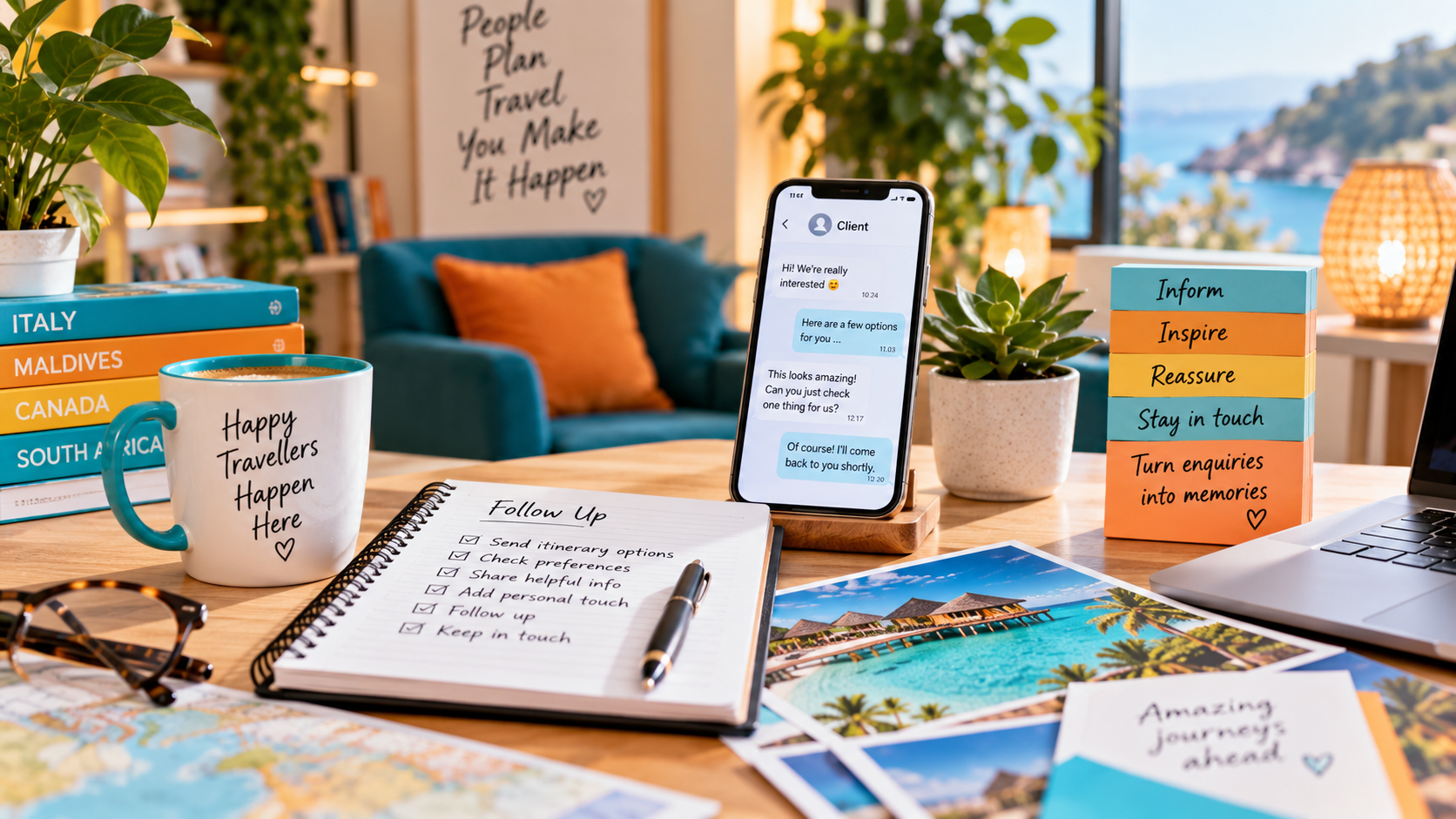
- Immediately: deliver the resource and introduce yourself briefly.
- A few days later: share one useful tip that helps the reader use the guide, such as choosing between shorter flying time and a warmer long-haul option.
- Later: explain one common decision clients struggle with, such as comparing board basis, transfer time or family room arrangements.
- When appropriate: invite the reader to reply with their dates and priorities if they would like personal help.
Keep the tone helpful rather than turning the sequence into a string of “book now” messages. The person downloaded the guide because they were researching. Give them space to move from research to enquiry at a natural pace.
If you are building automatic acknowledgements or follow-up messages, our guide to a travel autoresponder setup explains how automation can support the client journey without replacing personal service.
Promote One Lead Magnet in Several Different Ways
Do not spend hours creating a useful resource and then mention it once on Facebook.
One winter sun guide can give you several weeks of connected marketing. You might:
- Pin the download to your main social profile.
- Create a Reel around one question from the guide.
- Use a poll asking followers what matters most in a winter sun holiday.
- Write a post comparing short-haul and long-haul priorities.
- Share one practical family winter sun tip.
- Add the guide to a relevant website article.
- Use a QR code on a local flyer or at an event.
- Mention the guide when somebody asks a relevant question, where promotion is appropriate and permitted.
The advantage is efficiency. You are not inventing eight unrelated marketing ideas. You are taking one useful campaign and showing different parts of it to the same target audience.
This also makes it easier to evaluate your wider activity. Our guide to reviewing your travel marketing strategy can help you spot whether your lead generation, follow-up and conversion process are working together.
Measure Enquiries, Not Vanity Numbers
A lead magnet with 200 downloads is not automatically better than one with 30. If most of the 200 people were freebie collectors with no interest in the kind of holiday you sell, the bigger number has little commercial value.
Track what happens after the download:
- How many people completed the form?
- How many opened the delivery email?
- How many replied with a travel question?
- How many became genuine enquiries?
- Which audience or promotional post produced the best conversations?
- Did any enquiries progress to quotes or bookings?
- What questions kept appearing that could improve the next version?
That information turns the campaign into a learning tool. If families download the guide but rarely enquire, the next version may need a stronger family focus or a clearer next step. If one social post consistently sends good-quality leads, repeat the angle rather than chasing a new idea every week.
Keep the Winter Sun Guide Current
Seasonal resources age quickly when they contain fixed prices, old routes, outdated hotel information or travel advice that may have changed. Keep an editable master and review it before every new campaign.
Check anything time-sensitive before reuse, including supplier examples, airline routes, destination information, hotel details, prices and entry requirements. If a detail is likely to change, consider whether it belongs in the permanent guide at all or whether it is better handled in your personal follow-up.
This keeps the lead magnet useful for longer and protects your credibility. A clean, accurate six-page guide is stronger than a beautiful 20-page brochure full of information that has gone out of date.
Jamie Says:
“If your winter sun guide could have been written for anybody, it will probably attract anybody. I would rather see a consultant create something small and very specific that makes the right client think, ‘That is exactly the question I was trying to answer.’
The lead magnet should not try to book the holiday on its own. Its job is to make the next conversation easier. If someone finishes it knowing what matters to them and feeling that you understand the choices, it has already done something useful.”
A Note for Members of the Public
This article is mainly written for people interested in becoming travel homeworkers or improving their marketing as an independent travel professional. If you found it while researching a winter holiday, you are very welcome here too.
If you would prefer personal help rather than building a marketing campaign, you can find an independent travel consultant through our public consultant directory and choose someone whose interests and experience fit the type of trip you are planning.
Frequently Asked Questions
What is a winter sun travel lead magnet?
It is a useful free resource designed around winter sun planning and offered in exchange for a potential client's contact details. A strong example might help someone compare destinations, organise their priorities or prepare a better holiday brief before speaking to a travel consultant.
How long should a winter sun lead magnet be?
Long enough to solve one clear problem and no longer. A one-page worksheet may be enough for a planner, while a destination comparison guide might need five or six pages. The reader should be able to finish it without feeling that they have downloaded a textbook.
Should I include holiday prices in the guide?
Usually only if there is a strong reason and you are prepared to keep them current. Prices and availability change, so a lead magnet is often more useful when it focuses on decision-making and directs the reader to you for a current personalised quote.
Which winter sun destinations should I include?
Choose destinations that are relevant to the clients you want and the products you can confidently advise on. A guide does not need to cover the whole world. A smaller comparison that clearly explains different holiday styles can be more useful than a long list of destinations.
Do I need a website to use a lead magnet?
Not necessarily, but you do need a professional way to explain the offer, collect details appropriately and deliver the resource. A website or approved landing page also gives potential clients somewhere to understand who you are before they share their details or make an enquiry.
Will The Independent Travel Consultants give me leads?
You should join on the basis that you are building your own client base. The Independent Travel Consultants provides training, systems, supplier access, marketing guidance and ongoing support, but it does not promise an automatic stream of customers. Learning how to create useful campaigns like this is part of building a genuine travel homeworking business.
Turn Seasonal Interest Into a Real Travel Business
Creating a winter sun travel lead magnet is a useful exercise because it brings several business skills together. You have to understand the client, choose a clear marketing message, create something genuinely useful, promote it consistently and follow up professionally.
Those are the same skills that help a travel homeworker build a client base over time. You do not need to arrive with a marketing degree or thousands of followers. You do need to be willing to learn what your audience responds to, improve your approach and give people a reason to trust you with their holiday.
If you are exploring travel homeworking, you can learn more about what it means to become an Independent Travel Consultant in the UK, including the training, systems, support and responsibilities involved.
And if you would like to talk it through with us, get in touch for a discovery call. It is a straightforward chance to ask questions, understand how our homeworking model works and decide whether building your own supported travel business feels right for you.
About Jamie Wake
Jamie Wake is the founder of The Independent Travel Consultants and Jamie Wake Travel, helping people build sustainable travel businesses with practical training, supportive systems and genuine guidance behind them.
Having built his own travel business following redundancy, Jamie understands the uncertainty, determination and learning involved in starting something new. He combines hands-on experience of running a UK travel company with knowledge of travel sales, customer service, marketing, supplier relationships, compliance and day-to-day business operations.
Through The Independent Travel Consultants, Jamie shares practical, honest guidance about becoming a travel homeworker, attracting and supporting customers and building a business that feels personal, professional and sustainable—not simply chasing bookings at any cost.