Creating a Travel Giveaway That Builds Your Audience
Creating a Travel Giveaway That Builds Your Audience
A travel giveaway can create a welcome burst of attention, but attention alone does not build a sustainable business. A post may collect hundreds of comments from people who love free prizes and still produce very few future enquiries. The real opportunity is to design a promotion that introduces the right people to your expertise, earns permission to continue the conversation and gives entrants a reason to stay after the winner has been announced.
The strongest travel giveaway ideas are not necessarily the most expensive. They are the ones that connect the prize, the entry method and the follow-up journey to a clear type of client. A cruise-focused travel homeworker needs a different giveaway from a consultant who specialises in family holidays, honeymoons, accessible travel or luxury tailor-made trips. The more relevant the prize feels to the audience you want to serve, the more useful the campaign becomes.
This guide explains how to plan a travel giveaway that supports audience growth rather than chasing vanity numbers. It covers prize selection, entry routes, promotion, follow-up, measurement and the compliance checks that should be completed before anything goes live.
A Giveaway Should Attract Future Clients, Not Just Prize Hunters
Giveaways are appealing because they can quickly increase reach. People comment, share, tag friends and visit a profile they may never have seen before. The difficulty is that a broad prize often attracts a broad audience. A generic cash prize, shopping voucher or expensive gadget may produce large entry numbers, but many entrants will have no meaningful interest in the travel service behind it.
A travel homeworker should therefore begin with the audience rather than the prize. Think about the person you would genuinely like to help during the next 12 months. They may be a first-time cruiser who feels overwhelmed by cabin choices, a couple planning a honeymoon, a parent trying to organise a multigenerational holiday or a traveller who needs more careful accessibility planning. The giveaway should make that person feel that the promotion was created with them in mind.
This is the same principle that makes travel lead magnets that attract the right people more valuable than generic downloads. A campaign works best when it filters for relevance before it asks for attention.
Set one primary objective. It might be growing an email audience, introducing a new specialism, generating conversations with local families, building awareness before a wedding fair or encouraging previous clients to re-engage. You can monitor secondary benefits, but trying to grow followers, collect testimonials, generate bookings, create user content and build an email list through one complicated competition usually weakens the whole campaign.
Choose a Prize That Connects Naturally to Your Travel Business
The prize is more than the reward. It is the first signal telling people what your business is about. A cruise planning prize attracts a different audience from a family travel organiser, a honeymoon consultation or an airport experience. When the connection is clear, entrants are more likely to remain interested in your content after the promotion ends.
The prize must also be realistic to fulfil. A full overseas holiday may sound impressive, but it brings detailed questions about flights, accommodation, travel dates, passports, insurance, transfers, availability, taxes, spending money, companions and what happens if the winner cannot travel. A carefully chosen smaller prize can create a stronger campaign with less financial and operational risk.
Before promising a supplier product, hotel stay, cruise benefit, attraction ticket or airport service, obtain written confirmation that it can be used as a promotional prize. Confirm availability, validity dates, restrictions, transferability, booking arrangements and who will deal with the winner. Never assume that access to a supplier rate or image library gives permission to run a giveaway using that supplier's name or product.
Travel Giveaway Ideas That Build a Relevant Audience
A personalised holiday planning session
Offer a one-to-one planning session built around a clear type of trip, together with a useful planning pack. A honeymoon specialist could offer a honeymoon ideas consultation, a destination shortlist and a personalised planning timeline. A cruise consultant could offer a first-cruise discovery session with a cabin and itinerary comparison.
This works because the prize showcases the service clients will eventually buy from you - your time, judgement and ability to simplify decisions. It is particularly suitable for a newer independent travel consultant who cannot fund a high-value physical prize but can offer genuine expertise. Be clear that the session does not include a holiday or guarantee a particular price.
A specialist travel planning bundle
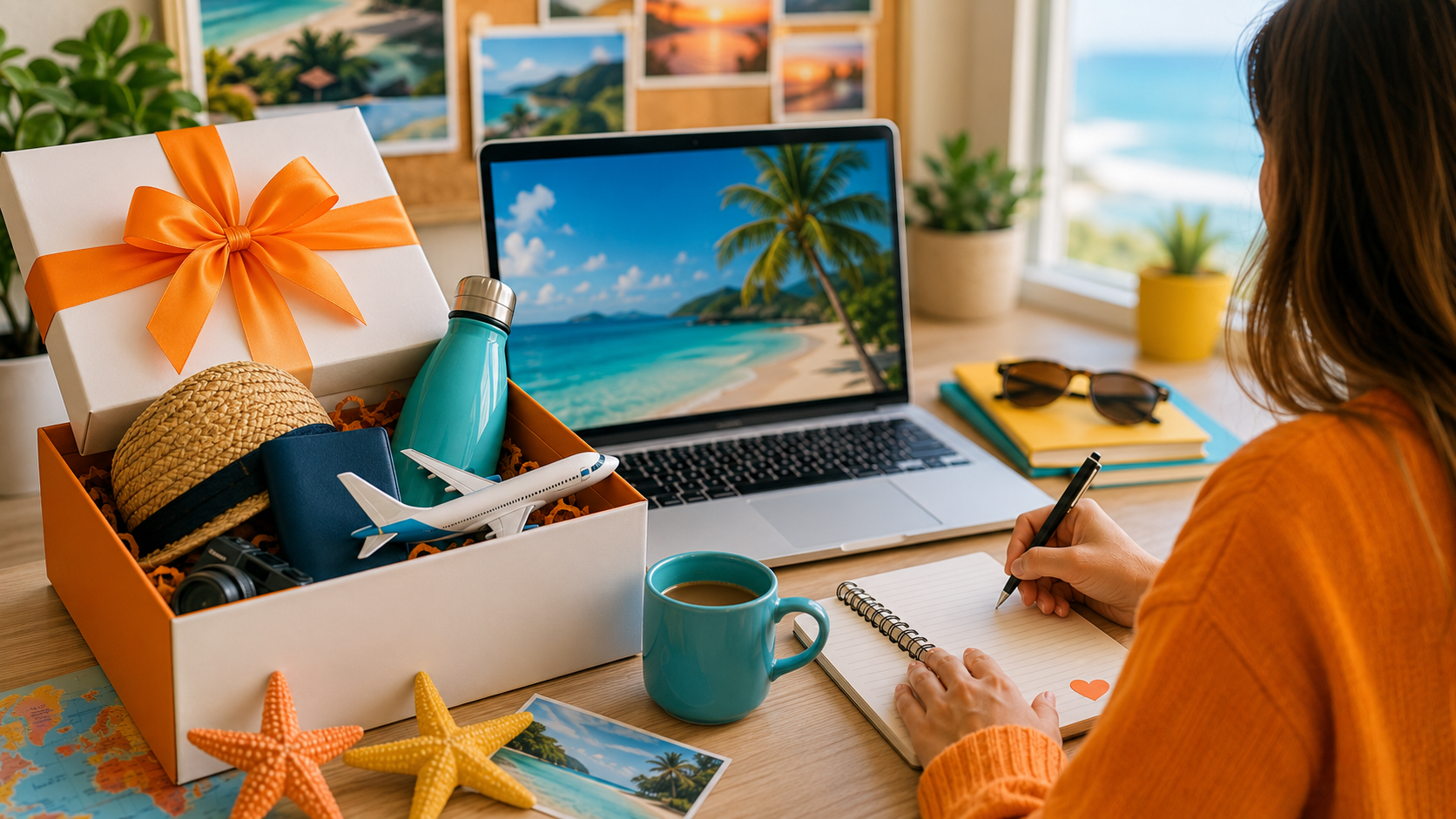
Create a bundle that reflects your niche. A family travel version could include children's travel journals, luggage tags, an organiser and a family holiday planning call. A cruise bundle could include practical accessories, a packing checklist and a cabin consultation. An Indian Ocean bundle might combine a quality beach bag, travel accessories and a resort-matching session.
The physical items create visual appeal, while the planning element introduces the winner to your expertise. Keep the bundle focused. A small collection of useful, relevant items is more memorable than a random hamper filled with products that have no connection to your audience.
A travel voucher with a defined purpose
A voucher can work well when it is attached to the kind of booking you want to attract. Rather than advertising a vague holiday voucher, explain what it can be used towards and any minimum booking value, travel period, exclusions or supplier restrictions. The terms must make the real value easy to understand.
A voucher is most effective when the amount is meaningful but proportionate. It should support a genuine booking decision rather than encourage people to request an unsuitable quote purely to use a small discount. The campaign should never disguise a conditional discount as a prize.
A destination discovery giveaway
Build a promotion around one destination or region you want to become known for. The prize might include a destination guide, themed gifts, a restaurant voucher from a relevant local partner and a private consultation to help the winner explore a future trip.
This approach gives the campaign a strong identity and produces useful supporting content. During the giveaway, you can share destination comparisons, seasonal advice, common mistakes and sample experiences. Entrants then discover more than the prize - they discover why your knowledge is valuable.
A collaborative giveaway with a complementary business
Partner with a business that serves a similar audience without competing directly. A honeymoon consultant might work with a wedding photographer, bridal boutique or local venue. A family travel specialist could partner with a children's activity provider. A luxury consultant might collaborate with a spa, restaurant or premium luggage business.
A good partnership gives both businesses access to a relevant audience and creates a more attractive prize without placing the full cost on one organiser. Agree responsibilities in writing before launch, including the promoter, prize provider, data controller, promotional schedule, winner selection, fulfilment and what happens if part of the prize becomes unavailable.
A travel story or photography competition
Invite people to share a short travel story, planning tip or photograph around a specific theme. This could work well for an anniversary campaign, a community group or a consultant with an established audience. The theme should connect naturally to your specialism, such as memorable multigenerational trips, accessible travel wins or favourite cruise moments.
This format creates richer participation than a simple comment draw, but it also requires more administration. Explain how entries will be judged, appoint an appropriately independent judge where required and make permissions clear. Do not assume that entering gives you unlimited rights to reuse photographs, stories or personal information. Obtain clear permission for any later marketing use.
A client appreciation giveaway
A giveaway does not have to chase strangers. A client appreciation promotion can reward people who have already booked, travelled, referred friends or remained engaged with your business. The prize might be a travel accessory bundle, airport lounge passes obtained through an authorised partner or a planning credit for a future trip.
This kind of campaign can strengthen loyalty and create a natural reason to reconnect. It should still have clear rules and should not disadvantage clients unfairly. Avoid changing the qualifying criteria after the promotion begins or implying that someone must make an unnecessary purchase to have a realistic chance of winning.
A giveaway linked to an event or live session
A wedding fair, local business event, cruise evening or online travel Q&A can provide a focused setting for a giveaway. Instead of collecting names with no context, connect entry to the subject of the event. Someone attending a cruise evening might enter to win a cruise planning bundle, while a wedding fair visitor could enter a honeymoon consultation giveaway.
The event gives you an immediate opportunity to demonstrate expertise and answer questions. Use a clear entry form, explain how data will be used and keep marketing consent separate from the act of entering. After the event, entrants who chose to hear from you can receive relevant follow-up rather than a stream of unrelated offers.
Design an Entry Route That Supports the Next Conversation
Entry should be simple enough to understand but connected to the campaign objective. Asking people to like a post may increase visible engagement, yet it gives you very little ability to build a long-term relationship. Asking for an email address through a dedicated landing page can support follow-up, but entry to the giveaway must not be treated as automatic consent to receive unrelated marketing.
A useful landing page should state the prize, eligibility, opening and closing dates, entry method and prominent restrictions before asking for information. Link to full terms that remain available throughout the promotion. Collect only the data genuinely needed to administer the giveaway. If you would also like entrants to join your email list, provide a separate, clear marketing choice rather than hiding it inside the entry conditions.
The thank-you page is often overlooked. Use it to confirm that the entry was received, explain when the winner will be contacted and offer an optional next step. That could be reading a planning guide, following a destination series or downloading a relevant resource. The purpose is to continue helping without making entrants feel trapped in a sales funnel.
Entrants who actively choose email updates should receive a relevant email welcome series for travel clients. Introduce yourself, deliver useful advice related to the prize and explain how your planning service works. Do not send the same generic sales email to a honeymoon audience, a family audience and a cruise audience simply because they entered the same form.
Complete the Compliance Work Before You Announce the Prize
A giveaway is a promotion, not an informal favour. The promoter is responsible for every stage, including the advertising, entry process, data handling, winner selection and prize fulfilment. UK promotional rules require campaigns to be administered fairly, promptly and efficiently, with significant conditions made clear before or at the time of entry.
There is also an important distinction between a free draw and a prize competition. A free draw is normally decided by chance. A prize competition is decided by skill, knowledge or judgement, and the skill requirement must be meaningful. Adding an extremely easy multiple-choice question does not automatically turn a random draw into a genuine competition. A paid entry route, purchase requirement or weak free-entry route can create additional legal risk, so seek professional legal advice if the mechanism is anything other than a straightforward free promotion.
Write terms that match the actual promotion
Do not copy another brand's terms and change the name. Your rules should cover who is running the giveaway, who can enter, geographical and age restrictions, opening and closing dates, the exact entry method, entry limits, the prize, exclusions, winner selection, notification, response deadlines, fulfilment and any circumstances in which a reasonable substitute may be offered.
Make the terms easy to retain or access throughout the campaign. Significant conditions should also appear prominently in the promotional post or landing page. A hidden link does not correct a misleading headline.
Describe every part of a travel prize precisely
Travel prizes need more detail than most product giveaways. State whether flights, accommodation, transfers, meals, baggage, insurance, visas, taxes, resort fees, gratuities and spending money are included. Explain valid travel dates, blackout periods, departure airports, room occupancy, companion eligibility, accessibility limitations, passport requirements and the booking deadline.
If the prize is a voucher, explain its value, expiry date, minimum booking requirement and any product restrictions. If dates are subject to availability, give entrants enough information to understand what that means. The phrase "subject to availability" should not be used as a substitute for planning a prize that can realistically be delivered.
Use a fair winner-selection process
A random draw should use a verifiably random process or appropriate independent supervision. A judged competition should use clear criteria and a suitably independent judge or panel member. Keep records showing how the winner was selected and how invalid or duplicate entries were handled.
State how and when the winner will be contacted, how long they have to respond and what happens if they cannot be reached or do not meet the eligibility rules. Be alert to fake accounts contacting entrants. Tell participants which official account or email address will announce the result and make clear that winners will never be asked to pay a fee to claim a prize.
Separate administration from marketing consent
You may need an entrant's contact details to administer the promotion and notify a winner. That does not automatically give permission to add every entrant to a marketing list. Use a separate choice for email or messaging updates, explain what people are signing up for and keep a record of the consent obtained.
Collect the minimum information required, store it securely and set a sensible retention period. If a partner will receive or use entrant data, explain that clearly rather than presenting the promotion as though only one business is involved.
Check the rules of every platform you use
Instagram, Facebook, TikTok and other platforms have their own promotion requirements, and those requirements can change. Review the current rules before launch. Include any required acknowledgements and do not ask people to participate in ways prohibited by the platform, such as inaccurate tagging or misleading sharing instructions.
A social media post should not be the only place where the full campaign is controlled. A dedicated website page gives you a stable location for the terms, privacy information, prize details and updates if a genuine issue occurs.
Jamie Says:
"A giveaway should never be launched because you feel your page needs more likes. Start with the person you want to attract, choose a prize that matters to them and decide what useful conversation will follow. If most entrants disappear the moment the winner is announced, the campaign created noise rather than an audience."
Promote the Giveaway Without Turning Your Feed Into Repetition
A giveaway needs more than one launch post, but repeated copies of the same graphic quickly become background noise. Build a small campaign around it. Introduce the reason for the giveaway, reveal the prize, explain one benefit at a time, answer common questions, show the people or businesses involved and give a clear final reminder before entries close.
A reusable travel marketing content bank can hold the photographs, captions, FAQs, email copy and reminder posts so the campaign is prepared before launch. This reduces rushed wording and makes it easier to keep the rules consistent across every channel.
Partners should receive an agreed promotional pack and schedule. Their audience should see the same eligibility, closing date and entry instructions. If an influencer or partner is being paid, receiving a benefit or promoting their own contribution to the prize, make sure the commercial relationship is identified correctly.
A consultant with a suitable community may also share the campaign through a client-only Facebook group, but group members should not feel that ordinary help and conversation have been replaced by constant promotions. Giveaways work best as occasional campaigns within a broader pattern of useful content.
Paid promotion can extend reach, but it should not be used to rescue a weak campaign. Before spending money, confirm that the prize attracts the right audience, the landing page works, tracking is in place and the promotional copy meets the advertising rules. Our guide to Facebook ads for travel agents explains why a clear objective and sensible test budget should come before boosting a post.
A Simple Giveaway Timeline for a Travel Homeworker
Three to four weeks before launch
Define the audience and objective, confirm the prize in writing, decide who is the promoter and draft the rules. Build the landing page, privacy wording, entry form, confirmation message and winner-selection process. Ask someone who was not involved in creating the campaign to test the entire journey on both mobile and desktop.
One to two weeks before launch
Create the campaign content, brief any partners and prepare responses to likely questions. Schedule the launch post, reminder content, closing-soon message and winner communication. Confirm that the prize is still available and that everyone responsible for fulfilment understands the dates and process.
During the giveaway
Monitor comments, messages, form errors and suspicious entries. Answer questions consistently and keep records of any genuine issue. Do not casually change the closing date, entry method or prize because engagement is lower or higher than expected.
After entries close
Close the form at the stated time, validate entries and select the winner using the process in the rules. Contact them securely, verify eligibility and arrange fulfilment. Publish or make available the required winner information while respecting any valid objection or request to limit what is disclosed.
Thank the wider audience and continue with the useful content promised during the campaign. Do not immediately bombard entrants with sales messages. The follow-up should feel like the next chapter of the subject that attracted them.
Measure Audience Quality, Not Just Entry Numbers
A campaign with 2,000 entries is not automatically more successful than one with 150. Review what happened after people entered. Did the right audience visit your website, choose to receive updates, read related content, reply to an email or start a genuine travel conversation?
Useful measures include:
- Valid entries from the intended audience
- Landing-page conversion rate
- Separate email marketing opt-ins
- Cost per relevant subscriber or enquiry
- Website visits to related planning pages
- Replies, discovery conversations and qualified enquiries
- Unsubscribe and complaint rates
- Follower retention several weeks after the campaign
- Partner audience overlap and referral quality
- Time and total cost required to administer and fulfil the giveaway
Review the campaign honestly. A low opt-in rate may mean the follow-up promise was weak. High entries with poor retention may mean the prize was too broad. Confused questions may show that the rules or creative were unclear. Use those lessons when you review the gaps in your travel marketing strategy.
Common Travel Giveaway Mistakes to Avoid
- Choosing a prize for maximum reach. A broad prize attracts people who may never need your service.
- Launching before the prize is confirmed. Supplier permission, dates and fulfilment should be agreed in writing.
- Using unclear travel wording. State exactly what is and is not included.
- Calling an easy question a skill competition. The legal structure must match the real entry mechanism.
- Copying terms from another giveaway. Rules must reflect your promoter, prize, audience and process.
- Automatically adding entrants to marketing lists. Giveaway administration and marketing consent are different purposes.
- Making entry unnecessarily complicated. Every extra task should support the campaign objective.
- Relying only on social media. Use a stable website page for details, terms and privacy information.
- Failing to plan the follow-up. Audience growth happens after entry, not when the comment count rises.
- Ignoring winner scams. Tell entrants how the genuine winner will be contacted.
- Changing the rules midway. Alterations can be unfair and undermine trust.
- Forgetting the cost of delivery. Include postage, booking work, partner time, taxes, substitutions and administration in the budget.
How Giveaways Fit Into a Supported Travel Homeworking Business
A giveaway can be one useful campaign within a wider marketing plan, but it does not replace consistent visibility, relationship-building and excellent client care. Successful travel homeworkers grow by developing a recognisable specialism, showing up regularly, answering real questions and providing dependable service before, during and after a booking.
The Independent Travel Consultants supports homeworkers with branding guidelines, marketing guidance, compliance support and help developing their own style rather than relying on identical generic templates. Consultants also receive training in booking systems, customer service, social media, day-to-day operations and the financial protection processes that sit behind professional travel sales.
Anyone exploring the wider opportunity can read our homeworking travel agent guide to understand the role, responsibilities and supported business model. A giveaway may introduce people to your brand, but the long-term business is built through knowledge, trust and the ability to look after real clients.
A Note for Members of the Public
This article is mainly written for people considering travel homeworking or developing their skills with The Independent Travel Consultants. Members of the public are also welcome to use our website when planning a holiday. You can find an independent travel agent whose interests, experience and personal approach match the trip you are planning.
Ready to Build a Travel Business With a Clearer Marketing Plan?
A well-planned giveaway can introduce your business to new people, but it should be built on much more than a tempting prize. The right audience, transparent rules, useful follow-up and reliable fulfilment are what turn a short campaign into lasting trust.
If you are considering becoming a travel homeworker and want to understand the training, systems, support and responsibilities involved, book a discovery call with The Independent Travel Consultants. We will help you explore the opportunity realistically and decide whether our supported independent model is right for you.
Frequently Asked Questions About Travel Giveaway Ideas
What are the best travel giveaway ideas for a small audience?
Choose a relevant prize rather than an expensive one. A personalised planning session, niche travel bundle, destination guide package or partner experience can attract better-matched entrants than a generic cash prize. The prize should demonstrate what your travel business helps people do.
Do I need to give away a complete holiday?
No. A complete holiday can create significant cost, legal and fulfilment complexity. Smaller prizes linked to your expertise often produce a more relevant audience and are easier to describe and deliver accurately.
Can I require entrants to join my email list?
Take care. Information needed to administer the giveaway is not automatically permission for unrelated marketing. Use a separate, clear opt-in for email updates and explain what subscribers will receive. Obtain professional data-protection advice where necessary.
What should be included in travel giveaway terms?
Terms normally need to cover the promoter, eligibility, entry method, opening and closing dates, entry limits, exact prize details, exclusions, winner selection, notification, fulfilment, data use and significant restrictions. Travel prizes also need clear details about dates, availability, transport, accommodation, extras and costs not included.
Is a giveaway the same as a competition?
Not necessarily. A free draw is usually decided by chance. A prize competition is decided by genuine skill, knowledge or judgement. The structure must meet the relevant legal requirements, so do not rely on an easy question to change the nature of the promotion.
How long should a travel giveaway run?
There is no universal length. A focused social giveaway may run for one or two weeks, while a larger partnership campaign may need longer. Allow enough time to promote the prize without letting the campaign become repetitive, and state a clear closing date that is not casually changed.
Should entrants have to tag friends?
Only use tagging when it is relevant, permitted by the platform and clearly explained. Asking someone to tag the person they would travel with can make sense, but mass tagging can feel spammy and may attract low-quality participation. Check the current platform rules before launch.
How should I select the winner?
Use the process stated in the rules. Random draws should use a verifiably random method or appropriate independent supervision. Judged competitions need clear criteria and suitably independent judging. Keep an audit trail of the selection.
How do I know whether the giveaway worked?
Look beyond entries and follower growth. Measure relevant email opt-ins, website engagement, qualified conversations, enquiries, retention and total campaign cost. The strongest result is an audience that continues to value your content after the prize has been awarded.
Can a new travel homeworker run a giveaway?
Yes, provided the promotion is properly planned, compliant and affordable. Start with a modest prize closely connected to your chosen audience. Confirm the rules and fulfilment before launch, and use the campaign to demonstrate useful expertise rather than trying to appear larger than the business is.
About Jamie Wake
Jamie is the founder of The Independent Travel Consultants and a passionate advocate for empowering others to succeed in the travel industry through honesty, training, and community. He brings decades of travel experience, a focus on doing things differently, and a strong commitment to supporting UK-based homeworkers.