Using Pinterest to Drive Website Traffic
Using Pinterest to Drive Website Traffic
Pinterest is often grouped together with social media platforms, but for a travel homeworker it can work more like a visual search engine. People use it to collect ideas, compare destinations, plan special trips and return to saved content when they are ready to make decisions. That creates a valuable opportunity for an independent travel consultant who wants useful website content to keep attracting visitors long after it is published.
A strong pinterest marketing travel strategy is not about chasing followers or posting a constant stream of attractive holiday photographs. It is about understanding what travellers are searching for, creating helpful pages that answer those searches, and designing Pins that lead people directly to the right place on your website.
This guide explains how to use Pinterest as part of a realistic travel homeworking marketing plan. It covers the foundations, the types of travel content that work best, how to create Pins that earn clicks, how to organise your boards, how to repurpose existing content and how to measure whether Pinterest is bringing useful traffic rather than empty attention.
Why Pinterest Can Work Well for Travel Homeworkers
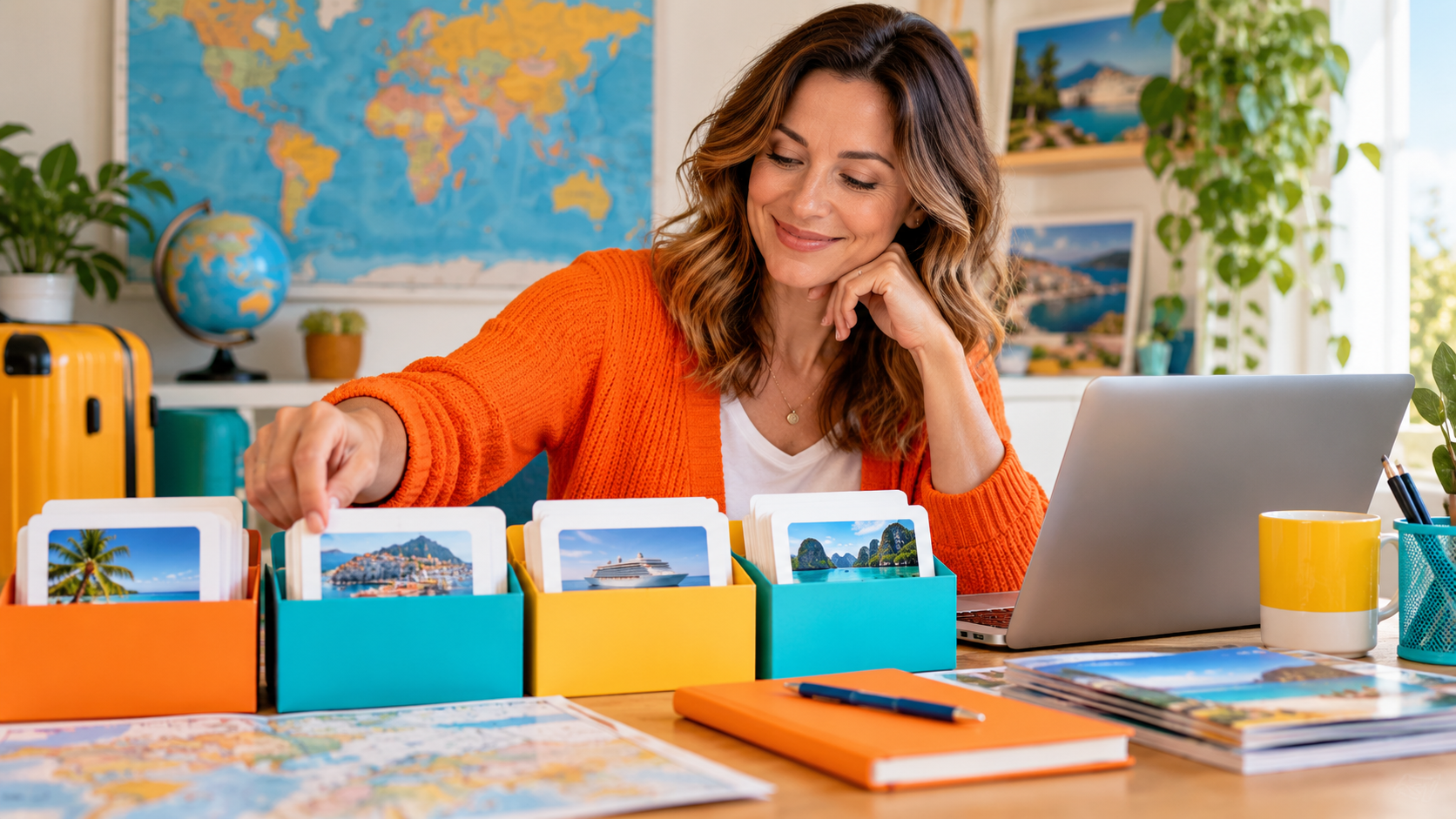
Travel planning is naturally visual. A photograph of a water villa, a family-friendly resort, a river cruise or a mountain railway can spark curiosity before a traveller knows exactly where they want to go. Pinterest gives people a place to save those ideas and gradually turn them into a more detailed plan.
That planning behaviour is particularly useful for travel consultants because many potential clients are not ready to request a quote the first time they discover a destination. They may be researching a honeymoon a year ahead, comparing cruise styles, looking for a child-friendly resort or deciding whether a multi-centre itinerary is realistic. A helpful Pin can introduce your expertise during that early research stage and give the traveller a reason to visit your website.
Unlike a fast-moving social feed, a Pin can continue to be found through searches and saved boards over a longer period. That does not mean every Pin will perform well, or that results will be immediate. It does mean that a well-written destination guide or planning article can become a more valuable long-term asset when Pinterest is used to distribute it.
For a travel homeworker, this is important because time is limited. Marketing must fit around enquiries, quotes, bookings, supplier communication and client care. Pinterest works best when it supports content you already own rather than becoming another platform that constantly demands something new.
Begin With the Website Page You Want People to Visit
The most common Pinterest mistake is designing an attractive image first and deciding where it should lead afterwards. Reverse that process. Start with the page on your website and ask what useful promise it makes to the reader.
A Pin about the best family areas in Majorca should lead to a page that genuinely helps families compare resorts, travel times, beaches, facilities and practical considerations. It should not lead to a generic homepage where the visitor has to search again for the information they expected to find.
The closer the landing page matches the promise made by the Pin, the more useful the visit becomes. A traveller who finds exactly what they were looking for is more likely to read further, view another article, join an email list or make an enquiry.
Before creating Pinterest content, review your most important pages. Check that each one has a clear subject, a helpful introduction, enough detail to answer the likely question and an obvious next step. Our guide to creating an effective travel website homepage is a useful starting point if the wider website journey needs attention.
Choose pages with a clear purpose
Strong Pinterest destinations often include detailed blog posts, destination guides, comparison articles, checklists, FAQs and niche planning resources. Each page should solve a recognisable problem. A broad page called “Luxury Holidays” is less useful than a guide comparing the Maldives and Mauritius for different types of traveller.
Before building a Pin, complete this sentence: “This page helps the reader…” If the answer is vague, improve the page before trying to promote it.
Make the next step feel natural
Not every visitor will be ready to request a quote. Give them another useful option, such as reading a related guide, downloading a planning checklist, joining an email list or exploring your specialist services. The aim is to keep helping them move forward rather than forcing an enquiry too early.
Set Up Pinterest as a Business Tool
A business account gives you access to features intended for marketing and measurement. Complete the profile carefully so that a potential client can quickly understand who you are, who you help and what type of travel you specialise in.
Use a recognisable business name and profile image. Keep the description specific. A consultant who focuses on cruises might mention first-time cruisers, family sailings and luxury voyages. Someone specialising in the Indian Ocean might mention Maldives honeymoons, Mauritius family holidays and tailor-made island escapes.
This focused wording helps both people and the platform understand what your account is about. It is more useful than listing every destination and product you can possibly arrange.
Where Pinterest offers account tools for connecting or claiming your website, follow the current instructions shown inside your business account. Platform features change, so current account guidance should always take priority over old tutorials.
Build Boards Around the Way Clients Plan Holidays
Board names such as “Travel”, “Offers” or “Dream Holidays” are too broad to guide a traveller or communicate useful expertise. Stronger boards reflect a destination, traveller type, occasion or planning question.
Think about the journey a potential client is taking. Some people are still dreaming. Others are comparing two or three options. Some have dates, a budget and a clear reason to travel. Your boards can support each stage.
Inspiration boards
These can introduce travellers to a type of experience before they have made a firm decision. Examples might include Romantic Indian Ocean Escapes, Wildlife Holidays for First-Time Safari Travellers or Small-Ship Cruise Inspiration.
The content should still be useful. Link to guides that explain who the experience suits, the best time to travel, the choices involved and the practical points a client should consider.
Comparison and planning boards
These are valuable when travellers are narrowing their choices. Examples include Maldives Island Comparisons, Family Cruise Planning, Where to Stay in Tenerife or European City Breaks by Month.
A comparison board gives you the opportunity to show balanced expertise. Rather than insisting that one destination is always best, explain how the right answer depends on budget, travel dates, accessibility, atmosphere, flight time and the individual client.
Ready-to-enquire boards
These can focus on more specific needs such as October Half-Term Family Holidays, Accessible Cruise Planning, Honeymoons From the UK or Last-Minute Winter Sun Ideas.
The linked pages should give practical information and make it easy for a suitable client to ask for personal help. Keep the wording helpful rather than turning every Pin into a hard-sell advert.
Turn One Useful Article Into Several Pins
You do not need to write a new website article every time you create a Pin. One detailed page can support several different search angles, provided every Pin accurately reflects what the reader will find.
An article about choosing a family-friendly cruise could produce separate Pins about cabin location, children’s clubs, dining, school-holiday budgeting and questions to ask before booking. Each Pin approaches the subject differently, but all of them can lead to the same comprehensive guide.
This is where a structured content system saves time. Choose one strong article, identify three to five questions it answers, and create a Pin around each question. Change the headline, image emphasis and description while keeping the promise truthful.
Building a reusable travel marketing content bank makes this process much easier. When you also create a travel blog that attracts clients, Pinterest becomes a way to distribute content you already own rather than an isolated extra task.
Use Search Language Without Making the Content Sound Robotic
Pinterest users often search with clear planning phrases. A broad phrase such as “summer holidays” reveals very little. A search such as “family resorts in Crete with waterparks” or “best river cruises for first timers” shows a more specific need.
Use Pinterest’s own search suggestions to understand how people phrase their ideas, then compare those phrases with the questions clients ask you. The best content topics often sit where real search behaviour and your genuine expertise overlap.
Use the main phrase naturally in the Pin title, description, board name and linked page where it makes sense. Avoid repeating the same wording so often that it becomes awkward. Search optimisation should make the subject clearer, not make the writing sound as though it was produced for a machine.
A focused pinterest marketing travel approach might build content around phrases such as “Maldives honeymoon planning checklist”, “best Greek islands for families”, “accessible city breaks in Europe” or “ocean cruise versus river cruise”. Each phrase suggests a useful article rather than a generic sales message.
Create Pins That Give People a Reason to Click
A Pin must be visually strong enough to attract attention, but its purpose is not simply to look attractive. It should make the subject clear and show the traveller what they will gain by visiting the linked page.
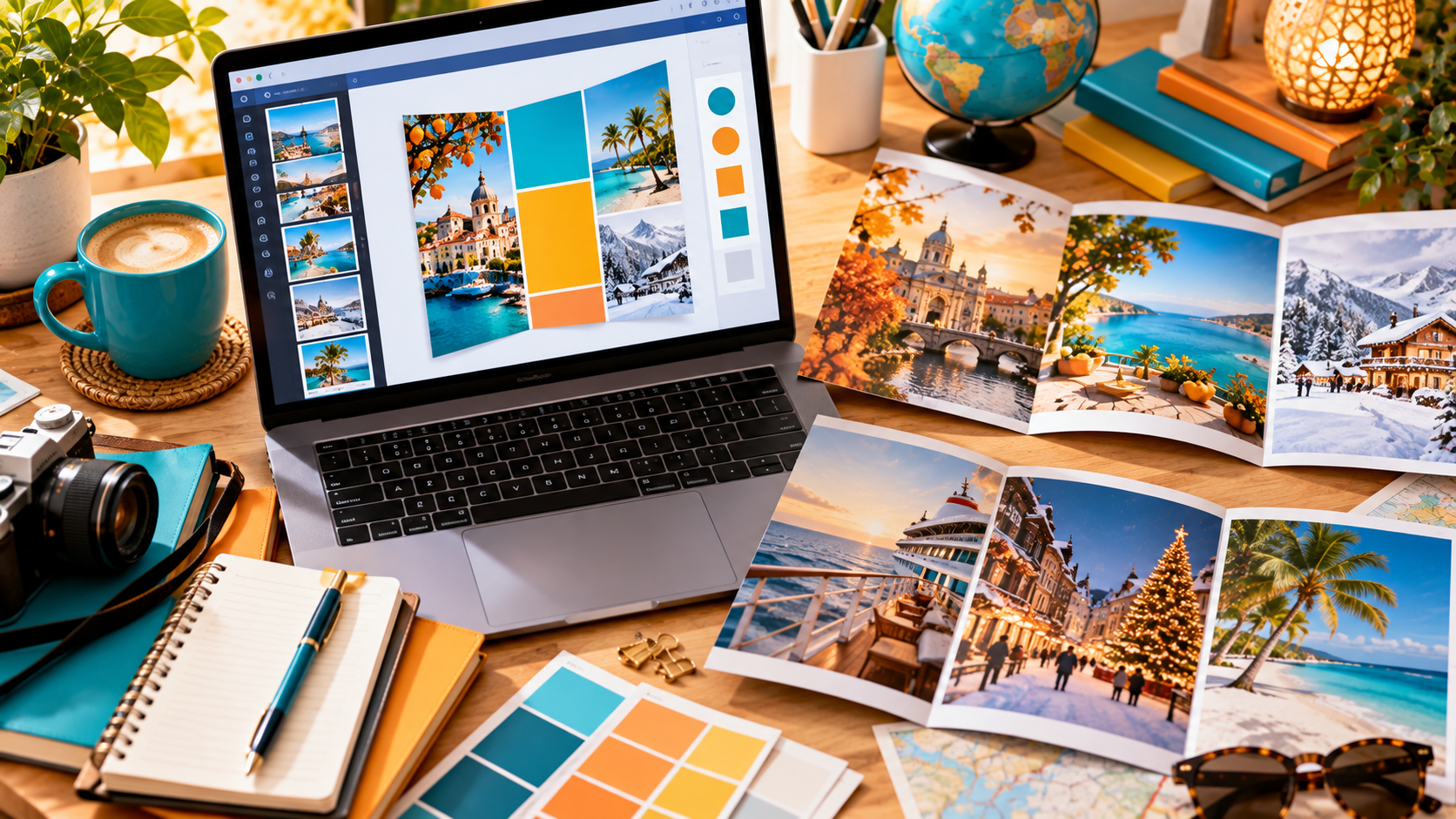
Use a clean vertical design that remains readable on a phone. Choose imagery that accurately represents the destination or experience and keep the visual message simple. Dedicated Pinterest graphics will usually work better than reusing a landscape blog header without adjustment.
The strongest headlines promise useful guidance. “7 Questions to Ask Before Booking a Family Cruise” gives the traveller a clear reason to continue. “Cruise Inspiration” is much less specific.
Descriptions should add context rather than simply repeat the title. Explain who the advice is for, what the page covers and why it will help. Natural phrases are more useful than a block of disconnected keywords.
Use images you own, have licensed or are authorised to use. Supplier images must be used within the terms provided to travel agents. Never take an image from a search engine or another creator’s account simply because it suits the destination.
Take extra care with prices, dates and offers. If a Pin contains time-sensitive information, it must be accurate, clear and compliant. Evergreen planning advice will usually provide a longer-lasting marketing asset than a short-lived deal.
Travel Pin Ideas That Can Lead to Useful Website Visits
Destination comparisons
Comparisons help people who have moved beyond general inspiration but are struggling to choose. A Pin might ask whether Mauritius or the Maldives is better for a family holiday, or whether an ocean cruise or river cruise is better for a first sailing.
The linked article should cover the genuine differences, including who each option suits, travel times, atmosphere, practical limitations, seasonal considerations and likely budget factors. Balanced advice demonstrates that your recommendations are based on suitability rather than simply promoting one product.
Seasonal planning
Travellers often search by month, school holiday or occasion. Useful topics include winter sun, Christmas markets, honeymoon seasons, summer family holidays and the best time to visit a particular destination.
Create and publish the linked content early enough to be discovered during the planning period. Review it regularly so that practical details remain current.
Niche expertise
A consultant with a clear specialism can use Pinterest to answer questions that broad travel websites often overlook. Accessible travel, solo cruising, multi-generational holidays, wildlife trips, luxury honeymoons and first-time cruise advice can all attract a more relevant audience.
Specific guidance may bring fewer visitors than a broad destination photograph, but those visitors are more likely to value personal expertise.
Checklists and planning resources
Packing lists, budgeting worksheets, enquiry checklists and first-time traveller guides give people a practical reason to visit and return to your website. A useful resource can also support permission-based email follow-up when the process is transparent and compliant.
Our guide to creating travel lead magnets that convert explains how to make these resources useful rather than creating downloads that collect email addresses without providing real value.
Jamie Says:
“Do not judge Pinterest by how many people follow you. Judge it by whether the right person finds a useful page, stays to read it and takes a sensible next step. One well-matched enquiry is worth far more to a travel homeworker than thousands of empty impressions.”
A Manageable Weekly Pinterest Routine
Pinterest works best as a steady system rather than a burst of activity followed by months of silence. A travel homeworker can begin with one focused session each week and expand only when the process is producing useful results.
- Review one website page. Check that the information is accurate, useful and easy to read on a phone.
- Identify three search angles. Pull out three questions, comparisons or benefits that the page addresses.
- Create three Pin variations. Change the headline, image emphasis or intended audience while keeping the promise accurate.
- Write natural descriptions. Explain what the traveller will learn and who the page is most likely to help.
- Check every link. Confirm that it leads directly to the relevant page and works properly on mobile.
- Schedule the Pins. Spread them over time and place them on the most relevant boards.
- Record what you have used. A simple tracking sheet prevents duplication and helps you see which pages have not yet been promoted.
Before adding Pinterest to an already busy week, it is sensible to review the gaps in your travel marketing strategy. The platform should support your priorities, not distract you from active enquiries, client follow-up and booked customers.
Measure Website Traffic and Enquiries, Not Vanity Numbers
Impressions show that Pins are being displayed, but they do not prove that the activity is helping your business. Saves may indicate future interest, while outbound clicks show that somebody chose to leave Pinterest and visit your website.
Website analytics then reveal what happened next. Look at which pages received Pinterest traffic, how long visitors stayed, whether they moved to another useful page and whether enquiries, downloads or email sign-ups followed.
Review patterns across several weeks or months rather than judging the whole platform on one Pin. A traveller may save an idea, return through a search engine later and contact you after several interactions. Marketing journeys are not always perfectly traceable.
The most useful questions are:
- Which Pins produce outbound clicks?
- Which website pages receive those visitors?
- Which subjects attract the most relevant audience?
- Do visitors continue reading or leave immediately?
- Are enquiries, downloads or sign-ups increasing?
- Which destinations and traveller types produce the best-quality conversations?
Use those findings to improve strong topics and retire ideas that create attention without attracting suitable clients.
Common Pinterest Mistakes Travel Consultants Should Avoid
- Sending every Pin to the homepage. Link directly to the page that fulfils the promise.
- Using vague board names. Build boards around destinations, traveller needs and planning questions.
- Posting only offers. Mix commercial opportunities with evergreen guidance and comparison content.
- Reusing Instagram content without adapting it. Pinterest needs search-focused wording, suitable vertical creative and a useful website destination.
- Ignoring search language. Beautiful imagery still needs a clear subject.
- Using images without permission. Respect copyright, licences and supplier terms.
- Forgetting old links. Audit Pins when URLs or website content change.
- Expecting instant bookings. Pinterest is usually a longer-term discovery and planning channel.
- Creating traffic with nowhere to go next. Make it easy to read more, download something useful or make an enquiry.
How Pinterest Fits a Supported Travel Homeworking Business
Marketing is only one part of becoming an independent travel consultant. A travel homeworker also needs training, booking systems, supplier access, customer care processes, compliance guidance and ongoing support.
At The Independent Travel Consultants, homeworkers can build their own brand and website while receiving guidance on marketing, social media and business development. The aim is not to give every consultant the same generic content. It is to help each person develop a recognisable voice and useful expertise while working within a supported business framework.
Our training and ongoing support forms part of that wider approach. For a realistic overview of the role, responsibilities and opportunities, read our homeworking travel agent guide.
Pinterest can help future clients discover your knowledge, but it cannot replace accurate quotes, reliable follow-up, personal service or professional booking processes. It should lead people towards your expertise, not create promises your service cannot fulfil.
A Note for Members of the Public
This article is mainly written for people considering travel homeworking or looking to improve their skills as a travel homeworker with The Independent Travel Consultants. Members of the public are equally welcome to use our website when planning a holiday. You can browse our directory to find an independent travel consultant whose knowledge, interests and personal approach suit the trip you are planning.
Ready to Build a Travel Business People Can Find?
Pinterest will not build a travel business on its own, but it can help useful content continue working after it is published. When it is connected to a focused website, a clear specialism and dependable client service, it can introduce future travellers to your expertise while they are still researching their options.
If you are exploring travel homeworking and want to understand the training, systems, support and responsibilities involved, you can book a discovery call with The Independent Travel Consultants. We will help you consider the opportunity realistically and decide whether our supported independent model is right for you.
Frequently Asked Questions About Pinterest Marketing for Travel
Is Pinterest worth using for a travel agent?
It can be, especially when you have useful website content and a clear niche. Pinterest is well suited to discovery and planning, so it can introduce potential clients to destination guides, comparisons and checklists before they are ready to enquire.
How often should a travel consultant post on Pinterest?
Consistency matters more than an ambitious schedule you cannot maintain. Begin with a manageable weekly routine, create several Pins from each strong website page and review which subjects generate relevant outbound traffic.
What should a travel homeworker Pin?
Useful ideas include destination comparisons, seasonal planning guides, packing lists, first-time traveller advice, niche travel tips, resort-area guides and answers to recurring client questions.
Should every Pin link to my homepage?
No. Link to the most relevant page. A Pin about family resorts in Majorca should lead to a suitable Majorca or family-holiday guide rather than making the visitor search for the promised information.
Do I need a travel blog to use Pinterest?
You need useful pages to receive the traffic, but they do not all have to be traditional blog posts. Destination guides, FAQs, comparison pages, checklists and planning resources can all work well.
How long does Pinterest take to generate website traffic?
There is no guaranteed timetable. Results depend on the topic, competition, consistency, creative quality and how closely the linked content matches real searches. It is best treated as a long-term content channel.
Can I reuse Instagram content on Pinterest?
You can reuse the underlying idea, but it should be adapted. Pinterest normally needs search-focused wording, vertical creative, a helpful description and a direct link to relevant website content.
Which Pinterest metrics matter most to a travel consultant?
Outbound clicks, relevant website engagement, downloads and enquiries are usually more useful than follower numbers alone. Saves can also show that people intend to return to an idea later.
Do I need to pay for Pinterest advertising?
No. Begin by creating useful organic content and learning which topics attract the right visitors. Paid promotion should only be considered when you have a clear objective, a suitable landing page, reliable tracking and an affordable test budget.
Can a beginner use Pinterest in a travel homeworking business?
Yes. Start with one audience, one useful website page and a small number of relevant Pins. Learn from the traffic and enquiries before expanding into more boards, subjects or paid promotion.
About Jamie Wake
Jamie is the founder of The Independent Travel Consultants and a passionate advocate for empowering others to succeed in the travel industry through honesty, training, and community. He brings decades of travel experience, a focus on doing things differently, and a strong commitment to supporting UK-based homeworkers.