How to Pitch All-Inclusive Holidays Successfully
How to Pitch All-Inclusive Holidays Successfully

All-inclusive holidays can look easy to sell. The meals, drinks and entertainment are wrapped into one price, the client knows more of their holiday costs before they travel, and there is often a strong selection of resorts to compare. But successful selling all inclusive holidays takes more than finding a hotel with a wristband and sending a price.
The real skill is working out what your client actually wants from an all-inclusive holiday, understanding exactly what each resort includes, and explaining the value in a way that feels relevant rather than sales-led. For a travel homeworker, that creates a much stronger conversation - and helps you compete on service and expertise rather than price alone.
This guide looks at how an independent travel consultant can qualify the enquiry, compare resorts properly, present the quote, handle common objections, promote offers responsibly and follow up without pressure.
What Selling All Inclusive Holidays Really Means
An all-inclusive holiday is not simply a board basis. It is a promise about how the client expects their holiday to feel. For one family, the attraction might be knowing that children can have snacks and drinks throughout the day without every purchase becoming another decision. For a couple, it may be the convenience of quality dining, premium drinks and activities within one resort. For a group, it can make shared spending much easier to manage.
That is why the strongest pitch starts with the client rather than the inclusions list. If you lead only with "all meals and drinks included", you risk making very different resorts sound identical.
Instead, connect the product to the problem it solves. This is the same principle behind learning how to sell travel without discounting your value . A good travel consultant does not simply prove that a holiday is cheap. They help the client understand why it is right for them.
Start With Client Fit, Not Resort Features
Before searching, understand what "all-inclusive" means in the client's mind. Two people can use the same phrase while expecting completely different holidays.
Useful discovery questions include:
- What is making all-inclusive attractive for this trip?
- Is the priority budget certainty, convenience, facilities, food and drink, or simply having less to organise?
- How much time do they expect to spend in the resort?
- Will they want to eat out locally on some evenings?
- Are branded or premium drinks important?
- Do they need children's clubs, waterparks, sports or evening entertainment?
- How important is à la carte dining?
- Do they expect room service, minibar replenishment or late-night snacks to be included?
- Are there dietary, accessibility or mobility requirements?
- What did they like or dislike about previous all-inclusive holidays?
These questions help you avoid one of the biggest sales mistakes: recommending the resort you like rather than the resort the client will value.
If you want to strengthen this part of your process, our guide to how to ask better client discovery questions goes deeper into turning an enquiry into a useful brief.
Remember That "All-Inclusive" Is Not a Standard Product
One resort's all-inclusive can be very different from another's. That matters because clients often compare two prices as though the products are directly equivalent.
Before pitching a resort, check the detail. Depending on the property, that can include:
- buffet meals and opening times
- à la carte restaurants and whether reservations are required
- how many à la carte visits are included
- local versus branded or premium alcoholic drinks
- fresh juices, speciality coffees and bottled water
- snacks between meals
- minibar inclusions and replenishment frequency
- room service charges or restrictions
- sports and non-motorised watersports
- children's clubs and age ranges
- spa access or treatments
- entertainment and activities
- service times, venue exclusions and any supplements
You do not need to read every inclusion to the client. You do need to know the details that affect their decision.
Building strong supplier relationships and product knowledge makes this much easier. Training sessions, supplier updates, resort visits and asking the right questions can turn a generic quote into a confident recommendation.
Pitch the Benefit That Matters to That Client
A feature becomes persuasive when the client understands what it changes for them. The same resort can therefore be presented differently to different people without exaggerating or changing the facts.
For families
Instead of simply listing unlimited soft drinks, snacks and children's entertainment, explain the convenience. Parents may value being able to say yes to an ice cream or drink without repeatedly reaching for their wallet. If the children's club gives adults a couple of hours to relax, that may matter more than the size of the main pool.
For clients who want predictable spending
All-inclusive can make the overall holiday budget easier to understand, but avoid promising that clients will spend nothing in resort. Excursions, spa treatments, premium menus, imported drinks, local taxes and other extras may still be payable. The pitch is greater cost visibility, not a guarantee of zero additional spending.
For couples
A couple may care far more about atmosphere, adult-only areas, quality dining, cocktails and a quiet pool than children's facilities. If they plan to spend most evenings in the resort, restaurant variety becomes particularly important. If they love exploring local restaurants, a different board basis might actually suit them better.
For groups
All-inclusive can remove some of the awkwardness around shared meals and drinks because much of the core spend is already covered. That can be a useful benefit for celebration groups or multi-generational families where individual budgets differ.
Compare the Total Holiday Experience, Not Just the Headline Price
Imagine one resort is £150 per person cheaper than another. The cheaper option might initially look like the obvious recommendation. But what if the client wants four à la carte dinners, branded drinks and paddleboarding, and those are included in the higher-priced resort but charged separately in the cheaper one?
Your role is not to manufacture savings. It is to help the client compare value properly.
When presenting alternatives, focus on the differences that matter:
- location and transfer time
- room type and occupancy
- beach and pool experience
- food quality and restaurant choice
- drink inclusions
- activities and entertainment
- family or adult-focused facilities
- likely extra spending
- flight times and baggage
- booking terms and flexibility
A well-structured comparison gives clients a reason to choose rather than simply asking them to react to a price.
Build a Quote That Makes the Decision Easier
Your quote should answer the client's questions before they have to ask them. That does not mean filling it with every paragraph from the supplier's website. It means selecting the information that supports the recommendation.
A useful presentation might say:
"I have shortlisted this resort because you told me the children need plenty to do, you wanted more than buffet dining, and you would prefer to know most of your holiday spending before you leave. This option includes the kids' club for their age group, three à la carte restaurants within the all-inclusive plan and daytime snacks and drinks. I have also highlighted the few things that cost extra below."
That is much stronger than sending a hotel name, star rating and total price.
Our guide to how to design travel quotes that make comparison easier can help you turn the research into a professional client-facing proposal.
Do Not Oversell the Word "Included"
Trust is particularly important when selling an all-inclusive holiday because the client is buying with an expectation of convenience. A small exclusion can feel much bigger if they believed it was included.
Be precise. If premium spirits cost extra, say so. If an à la carte restaurant has a supplement, explain it. If the minibar is included only on arrival, do not imply daily replenishment. If water sports depend on weather, availability or a licence, make that clear.
It is also worth checking whether facilities or inclusions change seasonally. A resort may operate differently in April than it does in August, and opening times, restaurants and entertainment programmes can change.
Clear expectations do not weaken a sale. They make the booking safer and give the client greater confidence in you.
Sell the Destination as Well as the Resort
One outdated assumption about all-inclusive holidays is that guests never need to leave the property. Some clients will happily spend most of the week by the pool. Others want the convenience of an inclusive base while still visiting local restaurants, markets, beaches and attractions.
Ask which type of traveller you are speaking to. A client who enjoys exploring may prefer a resort close to a town or with easy transport connections. Someone seeking a complete fly-and-flop break may value a larger resort with extensive facilities.
This is where selling travel experiences rather than just holidays becomes useful. You can recommend a resort for its convenience while still helping the client see what exists beyond the entrance.
Handle Common All-Inclusive Objections Calmly
Objections are often useful clues. Rather than defending the product immediately, find out what sits behind the concern.
"We do not want to eat buffet food every night"
That may point you towards a resort with a stronger à la carte programme, dine-around options or restaurants included within the package. It may also tell you that all-inclusive is not actually the best board basis for this particular client.
"We want to experience the local area"
Reassure them that all-inclusive does not require them to stay on-site. Then consider location carefully. A resort within walking distance of a town or with good transport may be a much better match than an isolated property.
"It feels expensive"
Break down what the client is comparing. If their alternative is room-only or bed and breakfast, discuss the likely cost of lunches, dinners, snacks, drinks and activities without pretending you can know their exact spend. Sometimes all-inclusive offers better value. Sometimes it does not.
"We do not drink much alcohol"
Do not make the sale about alcohol. Meals, soft drinks, coffee, snacks, activities, children's facilities and convenience can still create value. If those benefits are not important either, another board basis may genuinely be better.
Market All-Inclusive Holidays Responsibly
Social media can generate strong interest in all-inclusive offers, especially when the price is easy to understand. But the advert still needs to represent the actual holiday accurately.
For UK consumer marketing, the price shown should include mandatory charges that can be calculated in advance. If a mandatory charge is payable locally, that does not automatically mean it can be hidden from the headline offer. Where a genuine "from" price is used, it must not mislead people about what they can realistically book.
When selling all inclusive holidays through posts, emails or deal groups, make the important conditions easy to see. State the relevant departure details, dates or travel period, duration, board basis, occupancy basis and material exclusions. Do not create artificial urgency or describe something as "last chance" unless that is genuinely supported.
Our guides to promoting holiday deals on social media and how to promote limited-time travel offers ethically explore this in more detail.
Follow Up by Reconnecting the Client to Their Priorities
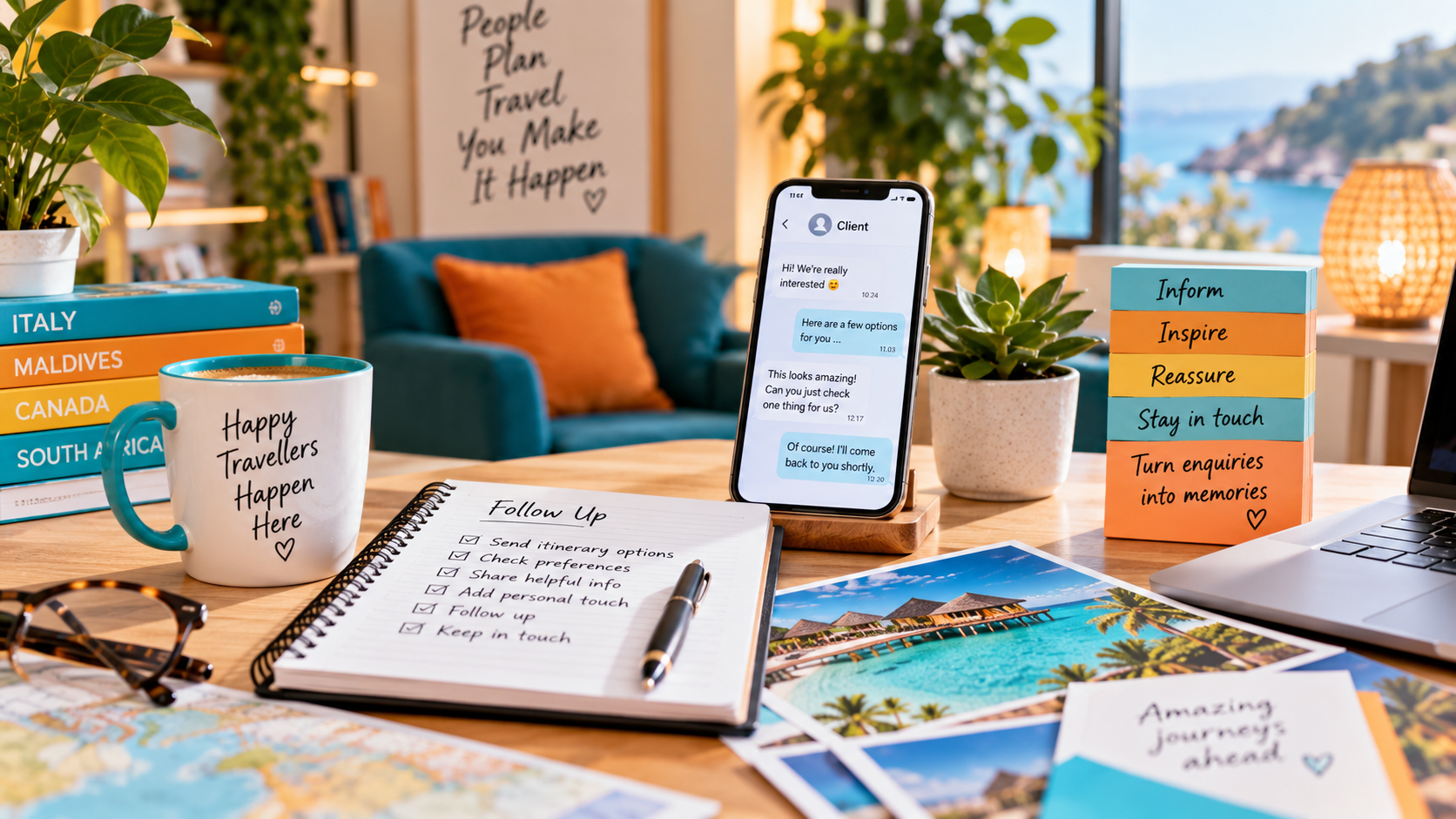
A weak follow-up asks, "Have you had a chance to look?" A stronger one reminds the client why the recommendation was made.
For example:
"I wanted to check how you felt about the two options. Based on what you said about restaurant choice and keeping extra spending predictable, I still think the second resort is the stronger fit. The first saves on the initial price, but more of the dining and drinks you wanted sit outside its standard all-inclusive plan."
This gives the client something useful to respond to. It also demonstrates that you listened.
If consultation and follow-up are areas you want to strengthen, see our practical advice on how to improve your travel consultation calls .
Jamie Says:
"Do not sell the wristband. Sell what the wristband changes for that particular client.
If a family tells you that they are tired of saying no every time the children ask for another drink or snack, convenience matters. If a couple tells you food is the highlight of every holiday, restaurant quality matters. If someone wants to leave their wallet in the room and relax, clarity around what is genuinely included matters.
The best all-inclusive recommendation is not necessarily the resort with the longest inclusions list. It is the one whose inclusions match what the client will actually use and value."
Why This Skill Matters for Travel Homeworkers
For someone building a travel homeworking business, all-inclusive enquiries are a useful opportunity to demonstrate the difference between searching and consulting.
A client can find thousands of resort prices online. What is harder to find is someone who understands their brief, spots the meaningful differences between two products, explains the exclusions and remains available when questions arise.
That is also why product knowledge is only part of becoming an effective independent travel consultant. You need discovery skills, supplier knowledge, compliant marketing, professional quoting, booking processes and client care. A supported model can help new consultants develop those skills while they build their own customer base and personal brand.
If you are exploring whether this career could suit you, you can learn more about the travel homeworking opportunity with The Independent Travel Consultants , including the support and structure behind the business.
A Note for Members of the Public
This article is written mainly for people who are interested in becoming travel homeworkers or improving their skills as independent travel consultants. We also know that holidaymakers may find it while researching all-inclusive travel.
If you would prefer help choosing and booking your own holiday, you are very welcome to find an independent travel agent through our public consultant directory. A consultant can help you compare the details that matter rather than simply presenting a list of resorts.
Frequently Asked Questions About Selling All-Inclusive Holidays
What should a travel agent ask before recommending an all-inclusive holiday?
Ask why all-inclusive appeals to the client, how much time they expect to spend in the resort, what food and drink they value, whether they want activities or children's facilities, how important budget certainty is, and what they liked or disliked on previous holidays. The answers should shape the shortlist.
Does all-inclusive always include every meal, drink and activity?
No. Inclusions vary by hotel, room category, package and sometimes season. A consultant should check restaurant access, drink brands, snacks, minibar, activities, entertainment and any supplements rather than assuming one resort operates like another.
How can a travel homeworker sell all-inclusive without competing only on price?
Make the comparison about fit and overall value. Explain which inclusions solve the client's priorities, identify meaningful differences between resorts and be open about what costs extra. Expertise gives the client a reason to book with you beyond the cheapest headline price.
Is all-inclusive always better value than half board or self-catering?
No. It depends on how the client travels. Someone who spends most of the day exploring and loves local restaurants may get less value from an extensive resort plan. A family that expects to use the resort's meals, snacks, drinks and activities heavily may find all-inclusive far more useful.
How do you explain two all-inclusive resorts with very different prices?
Compare the elements that create the price difference, such as room standard, location, dining, premium drinks, activities, children's facilities, service level and likely extras. The goal is not to justify the dearer resort automatically - it is to help the client understand what they receive for the difference.
Should travel agents encourage clients to leave an all-inclusive resort?
If exploring suits the client and destination, absolutely. An all-inclusive plan is a board arrangement, not a requirement to stay behind the resort gates. Discuss local restaurants, excursions, culture and transport where relevant, and match the resort location to how the client wants to spend their holiday.
What is the biggest mistake when selling all-inclusive holidays?
Treating every all-inclusive product as interchangeable. The strongest consultants qualify the client first, verify the inclusions, explain the important exclusions and recommend the resort whose experience best matches the brief.
Build a Travel Business Clients Trust
Learning how to pitch all-inclusive holidays is really about learning how to consult. Ask better questions, know the product, make comparisons easy, communicate honestly and recommend what suits the client - even when that means deciding that all-inclusive is not the right answer.
Those are the skills that help a travel homeworker move from sending quotes to building long-term client relationships.
If you are considering becoming an independent travel consultant and would like to understand the training, support and day-to-day reality of working with The Independent Travel Consultants, get in touch to arrange a discovery call . It is a chance to ask questions, understand the model and decide whether travel homeworking is the right next step for you.
About Jamie Wake
Jamie Wake is the founder of The Independent Travel Consultants and Jamie Wake Travel, helping people build sustainable travel businesses with practical training, supportive systems and genuine guidance behind them.
Having built his own travel business following redundancy, Jamie understands the uncertainty, determination and learning involved in starting something new. He combines hands-on experience of running a UK travel company with knowledge of travel sales, customer service, marketing, supplier relationships, compliance and day-to-day business operations.
Through The Independent Travel Consultants, Jamie shares practical, honest guidance about becoming a travel homeworker, attracting and supporting customers and building a business that feels personal, professional and sustainable—not simply chasing bookings at any cost.