Using Instagram Carousels to Showcase Destinations
Using Instagram Carousels to Showcase Destinations
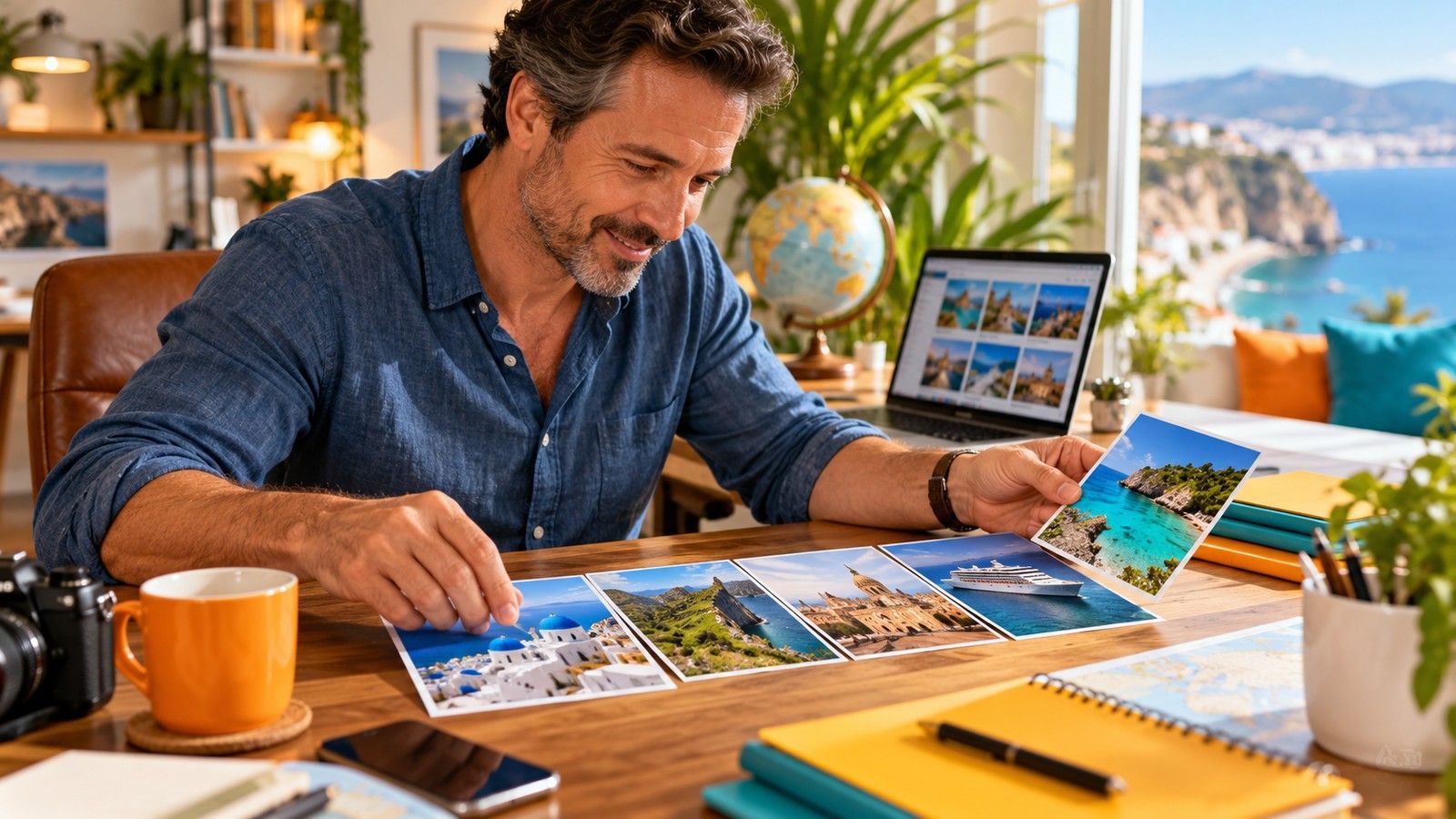
Good instagram carousel travel tips turn destination photographs into something more useful: a small, swipeable travel guide that helps a customer picture the holiday and understand why your advice matters. For a new travel homeworker, that is a stronger introduction than another lovely beach photograph with no explanation.
You do not need to be an influencer, travel constantly or master design software. You need to know who you are speaking to, choose a question about a destination and answer it clearly. An effective carousel shows the judgement and care an independent travel consultant brings to planning holidays.
This guide explains how to plan a sequence, choose pictures, write a natural caption and turn interest into conversations. The examples are intended for UK travel homeworkers balancing marketing with training, customer enquiries and everyday life.
Why Instagram carousels work for travel homeworkers
A carousel is a single Instagram feed post containing several photographs or videos that people swipe through. It gives you room to explain a destination without making a long video. A useful sequence might show where to stay, what to do, how to get around and what to consider before choosing a holiday.
People rarely make a holiday decision on scenery alone. A family may love a Greek island photograph but still need to know whether transfers are simple and which area suits young children. A couple planning a city break may want a comparison of central and quieter neighbourhoods. A first-time cruiser may not know what a sea day involves. Your carousel can answer these questions.
Such posts may be saved, shared with a travelling companion and revisited during planning. But saves and likes are not bookings. The real purpose is to demonstrate reliable advice and make it easier for the right person to enquire. Our guide to social media for travel agents explains where Instagram fits alongside Facebook and TikTok for a homeworking business.
Choose the traveller before you choose the pictures
Imagine one person reading your post. Are they parents planning a first overseas family holiday, a couple celebrating an anniversary, somebody considering their first cruise or a traveller who wants to avoid a busy resort? Your answer will determine both the content and the photographs.
Then select one question. “Is Madeira suitable for families who enjoy exploring?” offers a clearer reason to read than “Beautiful Madeira”. “Which area of Crete suits a peaceful couples' holiday?” is more helpful than a gallery of sunsets. Specificity allows the right audience to recognise themselves.
There is no need to suggest that every destination suits everybody. A lively location may be excellent for nightlife but unsuitable for somebody who prioritises quiet evenings. A hillside property might have fabulous views but present difficulties for someone with limited mobility. Honest trade-offs show you are thinking about the traveller, not simply selling the destination.
Gather ideas from genuine client questions, your supplier training, personal experience and destination research. A recent discussion about transfers could become a practical guide. For more inspiration, read about creating travel content that connects with your ideal client.
A seven-slide destination carousel, from start to finish
Instagram permits longer carousels, but five to seven slides is a sensible starting point. Each should perform a distinct job. Here is an illustrative Madeira carousel for a family that enjoys exploring. It is destination guidance, not a live holiday offer.
Slide 1: Make a specific promise
Use a strong, recognisable destination photograph and a heading such as “Madeira with children: seven things worth knowing”. Promise useful guidance rather than relying on “Dream holiday” or another generic slogan. Ensure the headline remains legible on a phone.
Slide 2: Establish the holiday style
Explain that Madeira may appeal to families who enjoy scenery, days out and exploring, rather than assuming every family wants long stretches of sand. A garden, coastal view or family-friendly outing can illustrate the point.
Slide 3: Compare possible bases
Introduce the difference between staying around Funchal and choosing a quieter location elsewhere. Avoid claiming that every hotel is within easy walking distance of attractions. Actual location, accessibility and transport requirements matter.
Slide 4: Show one worthwhile experience
Feature a viewpoint, garden or boat outing, with a sentence about why a family might enjoy it. Check age suitability, seasonal opening arrangements and weather considerations for the proposed travel dates.
Slide 5: Answer the practical question
Explain the relevance of hills, transfer times and transport choices. These details help customers picture their days and demonstrate the value of thoughtful travel advice.
Slide 6: Be candid about limitations
Be clear that beach types, facilities and swimming conditions vary. A family determined to spend every day on a broad sandy beach might benefit from discussing a different destination. It is better to give an honest recommendation than to make a universal claim.
Slide 7: Start a conversation
Finish with a natural invitation: “Thinking about Madeira but unsure where to stay? Tell me your children's ages and what your ideal family day looks like.” Do not suggest a particular hotel or price has been reserved when it has not.
Read the carousel as one story. If a slide repeats another, remove it. If the opening promises answers that the rest never provides, revise the heading before you publish.
Other destination carousel ideas that demonstrate expertise
A Greek island comparison for couples
Compare experiences rather than posting six similar sunsets: a walkable harbour, a lively old town, a quiet beach, an evening dining area and a more secluded retreat. Ask whether your readers like exploring on foot or switching off at their hotel. Explain that transfer time, accessibility and resort facilities must be checked for a specific booking.
A couple planning an anniversary may appreciate atmosphere and an easy evening stroll, while another pair may want privacy and a pool. Neither is wrong. Your job is to help them recognise which holiday suits them.
A first-cruise guide
A cruise specialist could build slides on embarkation, life at sea, dining arrangements, excursions and potential extras. Explain that inclusions vary by ship, fare and cruise line. A slide answering “Do I have to book an excursion in every port?” may be more useful than another ship photograph, provided you explain that port arrangements and itinerary conditions can vary.
A city-break neighbourhood guide
For Rome, contrast proximity to major sights, lively dining areas and convenient public transport. Explain the possible trade-off between location, cost and a quieter night. Check actual hotel access and walking distances rather than treating a whole neighbourhood as equally convenient. This is the sort of knowledge that can make an independent travel agent valuable to a client.
Write a cover and caption that belong together
Lead with one destination, one audience and one benefit. “First cruise? Five questions to ask before booking” offers much more than “Cruise inspiration”. The caption should add context rather than simply repeat every slide.
For the Madeira example, you might write:
“Not every family wants the same kind of beach holiday. Madeira can be wonderful if you enjoy getting out and exploring, but choosing the right base makes a difference. I've pulled together seven things to consider before deciding. What's more important to your family: a pool, easy evenings out or days exploring?”
This sounds like a person starting a conversation, not an automated sales message. It allows readers to share their preferences without being pressured to book. There are more examples in our guide to encouraging enquiries with soft calls to action.
Add the destination and question naturally to the opening, and use only relevant hashtags. Do not spend longer chasing hashtags than verifying the information in the post. Avoid claims such as “best hotel” unless you can explain your criteria and the type of client for whom the recommendation is suitable.
Design for the mobile screen, not a large desktop monitor
Choose photographs that genuinely explain each slide. A coastal picture suits an introduction to beach areas. A transport image might be more valuable when explaining transfers than yet another hotel pool. Use your own pictures, licensed photographs or approved supplier materials, and check any restrictions or attribution requirements. Never assume a public social media photograph is free to reuse.
Prepare slides at a consistent size. A practical starting point is 1080 by 1350 pixels in a 4:5 portrait layout. Keep headings clear, leave margins and check how the cover crops in your Instagram profile. Instagram's available sizes and carousel limits can change, and third-party schedulers may have different requirements, so verify the current rules before uploading.
Resist the urge to fill each slide with text. Use one idea per image, a readable headline and perhaps one concise supporting sentence. Check colour contrast and add descriptive image alt text where available. Consistency helps your work feel professional, but a restrained layout and a strong, genuine photograph matter more than decorative effects.
A practical workflow for a busy travel homeworker
When you work from home, marketing competes with training, enquiries, administration and client care. Make the process repeatable rather than assuming you must produce something elaborate every day.
- Choose a real question. Start with something a customer asked or an issue covered in approved supplier training.
- Name your audience. Identify the traveller whose plans and priorities you are addressing.
- Research the facts. Check relevant practical information using current, trustworthy sources.
- Draft the sequence first. Give each slide one purpose in plain text before opening a design application.
- Source appropriate imagery. Record the source and confirm you may publish each picture.
- Write the caption. Provide extra context and one natural invitation to respond.
- Proof it on a phone. Check spelling, legibility, accuracy and how somebody can contact you.
- Publish and review. Make a note of useful questions and genuine enquiries for next time.
Two or three outlines can be researched in one session and designed later. If daily posting is unrealistic, our advice on staying visible on social media without posting daily may help you build a rhythm that lasts. You do not need an influencer's schedule to operate a professional travel business.
Travel advertising and privacy checks before posting
Destination inspiration is still marketing. Information about a resort, hotel, cruise or holiday must not mislead people about prices, facilities, availability, arrangements or protection. Check practical details if they came from an old trip or presentation. If you have not visited the destination yourself, do not suggest you have.
If featuring a specific holiday offer, check the full customer price including unavoidable charges, actual availability, travel dates, occupancy and key conditions. Use the complete price rather than a misleading partial figure. Include the statement “Availability and price correct at the time of publishing, DD/MM/YY” , replacing the placeholder with the real date, and update or withdraw stale offers. The destination examples in this article are deliberately unpriced.
Disclose commercial relationships or gifted travel when advertising rules require it, and do not imply ATOL protection applies to every type of holiday. Protection depends on the arrangements sold. Provide the correct information through your approved booking process.
Obtain permission before sharing a customer's photographs, review, name or itinerary. Do not ask readers to publish private travel details in comments. Reply to genuine enquiries, but never assume a follow, comment or like gives you consent for unsolicited direct-message marketing. Direct messages used for marketing may be covered by UK privacy and electronic marketing rules.
Accurate, calm information does more for a consultant's reputation than an urgent offer that has not been properly checked. Follow approved brand guidance and booking procedures throughout.
Help a reader become an enquiry without pressure
An effective final slide can ask, “Not sure whether a city-centre hotel or a quieter area suits your trip? Tell me what matters most.” Readers are invited to explain their circumstances rather than being told to book immediately.
Your Instagram biography should say who you are, what travel you specialise in and how you can be contacted. Ensure the identity on your social profile is consistent with your professional information. Our article on updating your travel consultant bio offers helpful prompts for checking this.
When somebody contacts you, ask sensible discovery questions: when they want to travel, who is going, their priorities, flexibility and budget. Move personal details into your approved enquiry process rather than requesting them in a public comment. Explain that recommendations and prices follow once their requirements are understood.
One qualified conversation can matter more to a growing travel homeworking business than thousands of views from people who will never become customers. Keep the emphasis on relevance and service.
Measure conversations, not just likes
Use Instagram Insights, where available, to review reach, saves, shares, profile visits and comments. A save may show that the information is worth keeping. A share may show that somebody wants a partner's opinion. Neither is proof that a booking will follow.
Keep a short note of the carousel subject, intended audience, date, useful questions received and relevant enquiries. After six or eight posts, patterns may emerge. Perhaps family-friendly transport tips lead to more meaningful conversations than generic destination highlights. Or your cruise audience repeatedly asks about what is included.
If posts are saved but nobody gets in touch, check your final slide and contact details. If they are attracting the wrong audience, narrow the headline. If the same question appears repeatedly, make it the topic of another carousel. Avoid assuming a particular publishing hour, design trend or hashtag will always produce results.
Common carousel mistakes to avoid
- Unrelated photos: Build a story rather than a random gallery.
- Trying to appeal to everybody: Show whom a destination may suit and what compromises to consider.
- Outdated claims: Check practical details, particularly changing facilities, entry information and availability.
- Tiny text: Simplify the slide instead of making the font smaller.
- No next step: Make it easy to ask a genuine question without exaggerated urgency.
- Counting likes as sales: Track relevant conversations and your actual customer experience.
Jamie Says
Jamie Says:
“You don't have to pretend to be a travel influencer to build a travel business. Show people the little things you think about when choosing a holiday for them. That's where your value is. If somebody finishes your carousel better informed, you've done something useful, even if they aren't ready to book today.”
Instagram carousel FAQs
Must I have visited the destination personally?
No. You can use reliable current research, training and approved supplier information, provided you distinguish what you know firsthand from what you have researched. Do not invent hotel inspections, experiences or endorsements.
Can I use supplier or client photographs?
Use them only where you have the appropriate rights and permission, following any brand or attribution conditions. A public Instagram post is not permission to reuse somebody else's photograph.
Should I put holiday prices on the slides?
Not necessarily. An educational destination carousel often works better without prices. When advertising a specific offer, check availability, include all mandatory charges and material conditions, and make the verification date clear.
Do carousels guarantee more travel bookings?
No. They can help people discover your expertise and make enquiries, but bookings depend on many factors including suitability, service, trust and the customer's circumstances. Treat them as one tool within your business.
What if I am completely new to marketing?
Start with one destination and a question you can answer confidently. Developing your skills is part of building a business. The Independent Travel Consultants supports new and experienced homeworkers with training, marketing guidance and ongoing operational support.
A note for members of the public
This article is written mainly for people interested in becoming travel homeworkers or developing their skills with The Independent Travel Consultants. If you are planning a holiday rather than a business, you are also welcome. You can find an independent travel agent using our public consultant directory and choose someone with relevant experience for your trip.
Ready to build your own travel business?
Creating an Instagram carousel is only one part of working as an independent travel consultant. You also learn to understand clients, assess suppliers, explain financial protection and follow a professional booking process. Those skills help turn travel inspiration into a properly supported customer experience.
The Independent Travel Consultants supports people developing their own self-employed travel business. There is no joining fee, the standard service fee is £50 a month, and consultants have access to training, supplier relationships, systems and ongoing guidance. You build your own client base, and earnings are not guaranteed. Discover what is involved when you become an independent travel consultant with us.
Interested in finding out more? Contact us to arrange a discovery call. It is an opportunity to ask questions, understand the support available and decide whether travel homeworking is the right next step for you.
About Jamie Wake
Jamie Wake is the founder of The Independent Travel Consultants and Jamie Wake Travel, helping people build sustainable travel businesses with practical training, supportive systems and genuine guidance behind them.
Having built his own travel business following redundancy, Jamie understands the uncertainty, determination and learning involved in starting something new. He combines hands-on experience of running a UK travel company with knowledge of travel sales, customer service, marketing, supplier relationships, compliance and day-to-day business operations.
Through The Independent Travel Consultants, Jamie shares practical, honest guidance about becoming a travel homeworker, attracting and supporting customers and building a business that feels personal, professional and sustainable—not simply chasing bookings at any cost.